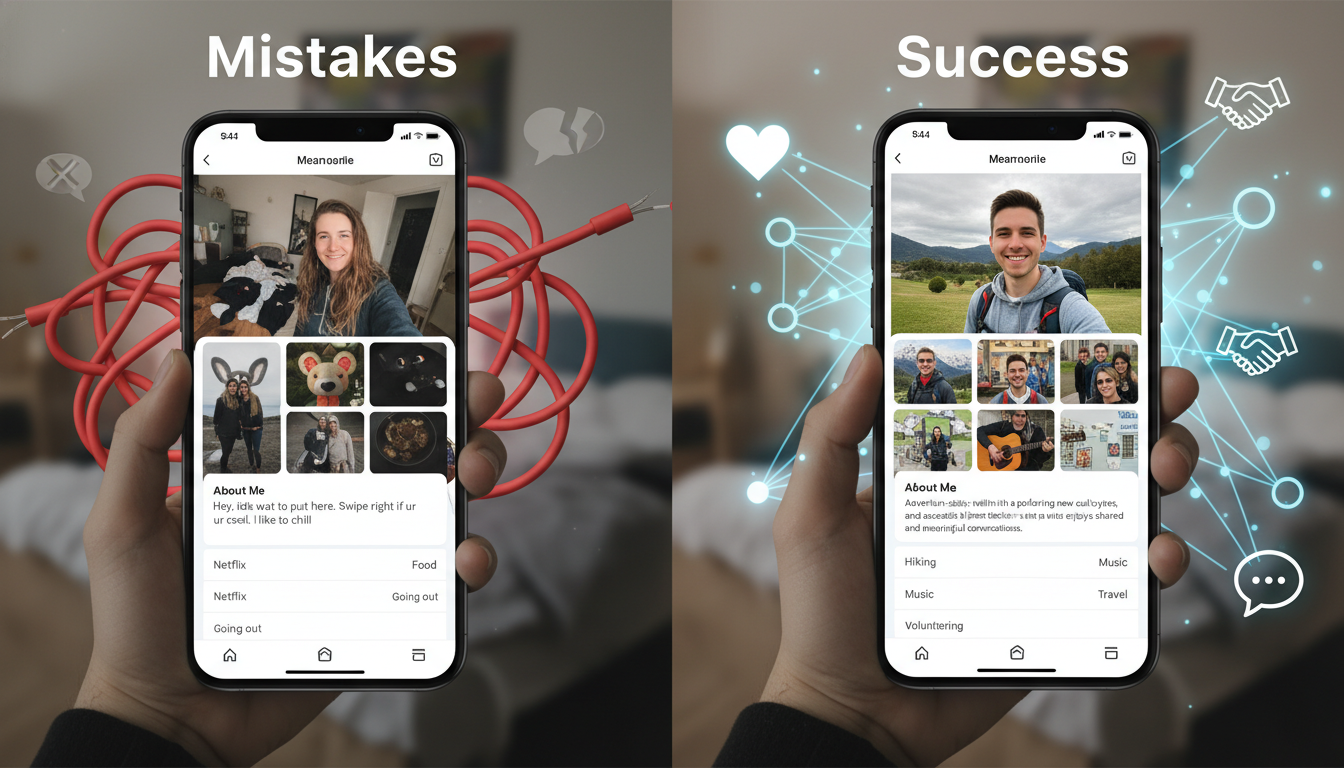
This short online dating guide explains how to improve communication. You can connect with clarity and confidence.
It is written for adults using apps like Tinder, Bumble, Hinge, OkCupid, Match, and eHarmony. The aim is practical: better profile choices, smarter openers, safer habits, and steady dating confidence.
Ads
Core principles in this online dating guide are simple. Aim for clarity in your profile and messages. Personalize openers using real profile details.
Keep safety top of mind by protecting personal data and setting boundaries.
Later sections will expand on profile crafting, first messages, maintaining momentum, safety measures, and strategic tweaks to improve results.
Platform features such as matching, prompts, swipes, likes, and message limits shape how conversations start and evolve. Response rates differ by app and approach.
Small improvements in wording and timing often produce measurable gains. Treat messaging as an experiment: test variations, note what works, and refine your approach.
The tone here is neutral and practical. You will find actionable dating success tips that avoid hype and focus on steady improvement.
Respect, clear communication, and modest iteration are the best paths to better conversations and stronger connections.
Key Takeaways
- Focus on clarity: write profiles and messages that are easy to read and direct.
- Personalize openers using profile details to improve reply rates.
- Prioritize safety by limiting personal data and setting clear boundaries.
- Use small, testable changes to measure progress and build dating confidence.
- Understand platform features—prompts, swipes, and message limits affect outcomes.
Crafting a Profile That Invites Conversation
A clear, inviting profile makes it easier for matches to start a chat. It gives you built-in material to reply to. Use short, specific details that reduce friction for a first message.
These details guide the tone of future conversations. Small choices in photos and prompts shape how others approach you on apps like Hinge or Bumble.
Choose photos that spark curiosity and conversation
Pick 4–6 photos showing a sharp headshot and one full-body image. Add one or two activity shots, like cooking or hiking. These images act as conversation starters by offering topics to mention.
Avoid using a group photo as your primary picture. Choose natural light and authentic expressions. Include a candid or social image and one prop—like a guitar or dog—that invites questions.
Write a bio with prompts and open-ended details
Use platform prompts to share short, answerable tidbits: a favorite weekend ritual, last book read, or a travel mishap. Prompts lower barriers for messaging and match well with personalized first message tips.
Keep the bio concise and in first person. List a few interests and one quirky detail that invites follow-up. Try “two truths and a lie” or a brief list like “coffee, indie films, trail runs” for easy hooks.
Include hobbies and stories that make good message material
Highlight hobbies that are easy to comment on: cooking a favorite dish, training for a local 5K, or volunteering at an animal shelter. Short anecdotes showing a small lesson prompt curiosity.
Mention specific tastes like favorite bands, podcasts, or the cuisine you cook most often. Update photos and prompts based on conversations to evolve your profile with real feedback.
online dating tips for Starting the First Message
First messages set the tone for conversations. Use clear communication that points to something specific in the profile. Short, targeted openers raise reply rates and keep interactions easy to answer.
Personalize your opener using profile details
Reference a concrete detail like a hiking photo, a book, or a prompt answer. Say which part caught your eye. Add one focused question. For example: “I noticed your photo at a farmers market — what stall should I not miss?” Personalization shows real interest and gives a simple path to reply.
Use engaging conversation starters that aren’t clichés
Avoid “Hey” and tired pickup lines. Choose starters that invite stories, like asking about a recent trip. Offer a short observation plus a question so the recipient has context and a clear reply option.
How to balance humor, sincerity, and brevity in a first message
Keep the opener to one or two sentences. Mild humor works if it’s inoffensive and easy to read. If it might be misread, choose a warm, curious question instead. Show sincerity by noting a specific detail and keeping tone respectful.
- Make your message short and direct to reduce reply friction.
- Mirror the other person’s energy: playful if they are playful, measured if they are thoughtful.
- Avoid multi-part questions that require long answers.
- End with an open-ended prompt to encourage a response.
These first message tips combine tone, detail, and brevity. Use them to make your first outreach feel natural and easy to answer. Practice these dating tips for meaningful connections.
Maintaining Momentum: Conversation Techniques That Work
Keeping a chat moving takes a mix of curiosity and clear intent. Use simple habits that make dating communication feel natural.
Small changes in phrasing and timing help turn initial interest into real rapport.
Ask open-ended questions to encourage storytelling
Start prompts with How, What, or Tell me about to invite longer replies. For example, try: “What’s a weekend you’ll always remember?” instead of a yes/no question about travel.
Mix light topics like favorite meals with deeper ones such as a hobby they kept through a challenge.
Use active listening and reflective replies online
Show you read the message by reflecting a detail back: “You mentioned you love jazz — who’s your go-to artist lately?”
Short follow-ups and callbacks to earlier points build continuity. Emojis can set tone but use them sparingly so the focus stays on real content.
Transitioning from small talk to meaningful topics
Move gradually after a few exchanges on shared interests. Introduce lifestyle or value-based questions in a neutral way, such as asking about weekday routines or travel priorities.
Avoid heavy subjects too early but ask about goals, favorite experiences, or what they enjoy about work or hobbies.
- When replies slow, reopen with a fresh, topical question about a recent show, book, or local event.
- Suggest low-pressure next steps when mutual interest forms: exchange favorite spots, swap a playlist, or propose a light activity.
- Keep your dating strategy adaptive: notice which conversation starters lead to longer threads and repeat that pattern.
These methods work for both dating advice men and dating advice women alike. They fit into any online dating tips routine.
They improve conversation starters with clearer signals and smoother momentum.
Dating Apps Tips for Safer and More Confident Communication
Good habits on apps keep conversations safer and make you feel more confident. Follow clear boundaries and watch for warning signs. Prepare a simple plan for how you want to communicate. These steps help you use dating apps with more control and less stress.
Set boundaries and share personal information carefully
Keep your full address, workplace, and financial details private until trust is well established. Use in-app messaging before giving out a phone number or scheduling a video call.
Share general neighborhood info and hobbies. Delay your last name until you feel comfortable.
Use built-in safety features from Tinder, Bumble, or Hinge. Photo verification badges and in-app video calls help verify matches.
Learn where block and report tools live so you can act quickly if needed.
Recognize red flags and unhealthy communication patterns
Look for inconsistent stories or pressure to move off the app quickly. Watch for attempts to isolate you from friends.
Be alert for excessive flattery, avoidance of direct questions, or dismissive replies to boundaries.
Watch for requests for money, vague emergency stories, or prompts to pay outside the platform. These are common scam signs. Pause and consider blocking or reporting the profile.
Boosting dating confidence through preparation and mindset
Prepare a few go-to topics or short anecdotes you enjoy sharing. Practicing these reduces anxiety and helps maintain steady conversation.
Decide what you want from interactions. Match your tone to your goal, whether casual chatting or exploring a relationship.
Set small, measurable goals like sending a number of personalized messages per week. Aim to move one match to a phone call within a set timeframe.
Track outcomes and adjust your approach based on what feels safe and productive.
Balance app time with offline activities to avoid burnout. Treat rejection as useful feedback rather than personal failure.
Use this mix of safe and online dating tips to build confidence and healthier connections.
Optimizing Your Dating Strategy for Better Matches
Small, data-led changes can lift reply rates and bring better matches. Use clear goals to guide your adjustments. Track what works and test one change at a time.
Keep your approach honest and consistent with the persona you present.
Refine search preferences and message targets strategically
Use filters like age range, distance, and shared interests to focus on realistic prospects. Broaden or narrow settings depending on the volume and quality of returns.
Target profiles where interests genuinely overlap instead of sending many generic messages.
Choose apps that suit your aims. Hinge and OkCupid reward longer bios and detailed prompts.
Tinder and Bumble move faster for quick matching. Rotate platforms to find the best fit for your dating strategy.
Timing and frequency: when to message and when to wait
Send messages when you can stay responsive for a stretch, not right before sleep. Aim to reply within 24–48 hours when practical.
Immediate replies are optional; steady responsiveness builds trust. Mirror the other person’s pace to avoid over-messaging.
If replies slow, pause and reassess. Use evening hours or weekends to increase reach while respecting time zones and routines.
Using conversation feedback to improve your profile and approach
Track which openers get replies and which photos prompt comments. Run small tests: swap a photo, reword a prompt answer, or change your bio tone.
Measure reply-rate changes after each tweak. Ask trusted friends for honest input on photos and bios.
Review stalled threads to spot topics that end conversations. Use conversation feedback to refine questions and shift tone.
Set a simple schedule: quick weekly reviews and monthly adjustments to photos or prompts. Keep messages authentic and aligned with your profile.
These steady, incremental steps turn online dating tips into a practical, repeatable plan.
Conclusion
Summing up key online dating tips: build an inviting, specific profile with stories and clear prompts. Craft concise, personalized first messages. Keep conversations going with open-ended questions while protecting personal information.
These actions improve match quality and promote healthier exchanges on dating apps.
For practical dating advice, focus on steady improvement. Test different photos and prompt answers. Track which messages work, and adjust tone or timing.
Use dating app tips like setting boundaries and spotting red flags. This protects well-being and boosts dating confidence.
Next steps for this week: update at least one profile photo. Rewrite a prompt answer to include a brief story. Draft three personalized openers to try.
Be patient and set realistic expectations. Refine your approach based on responses. Small experiments and consistent reflection lead to clearer signals and better tips over time.
Content created with the help of Artificial Intelligence.