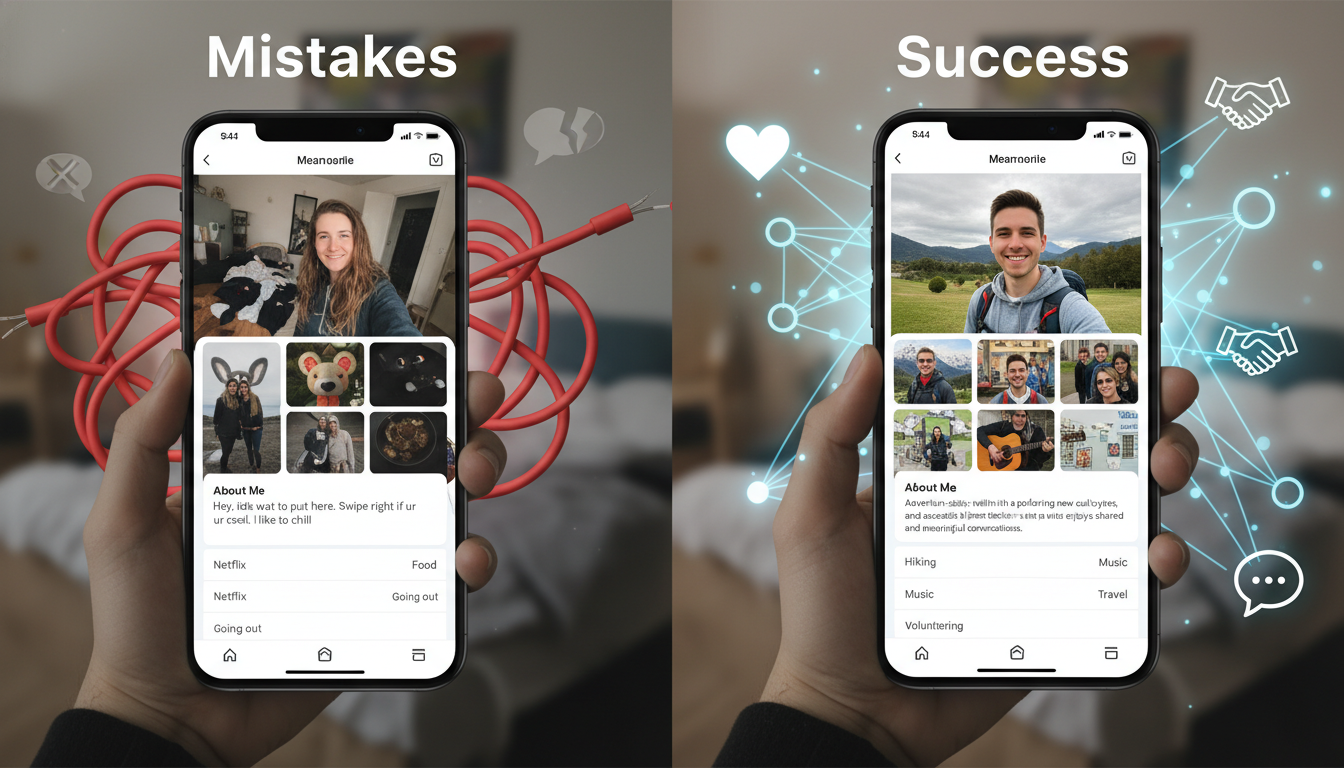
Choosing the best dating app between Tinder, Bumble, and Hinge can be difficult. This text compares the three platforms for you. Let’s see which one is more suitable for finding love, making friends, or even advancing your career.
Tinder, Bumble, and Hinge are quite popular among young people and professionals in cities. Each has its own advantages. Tinder is easy to use, Bumble gives more power to women, and Hinge helps build stronger bonds.
Ads
We will take a closer look at Tinder, Bumble, and Hinge. We will talk about how they generate revenue, verification, and the limits of the free versions. This way, you can see which one works best for your needs.
We will take into account how users interact with these apps. This includes what experts say about them. We will follow with details on features, paid plans, and safety. This should make your choice easier.
Tinder vs. Bumble vs. Hinge: Which Dating App is Right for You?
Choosing between Tinder, Bumble, and Hinge can be a challenge. If you want something casual, many profiles to view, or ease of use, Tinder is a great option. On the other hand, Bumble gives more power to women, who initiate the conversations, and is great for making friends or professional contacts. Hinge is better for those looking for a serious relationship, with more complete profiles and thoughtful prompts designed to create meaningful connections.
This text helps you choose the ideal dating app. We will compare the apps without bias. The goal is to provide tips for you to choose according to your needs: something casual, a more serious relationship, or the chance for women to make the first move.
Key differences in a few lines:
- Tinder: many users, easy to use, ideal for casual dates.
- Bumble: women in control of the conversation, with features also for friendship and networking, promoting greater safety.
- Hinge: geared towards serious commitments, encourages deep conversations with questions and prompts.
To compare, we will discuss user experience, demographics, paid plans, as well as safety and privacy. We will use public data and research to better understand each app. This way, you can decide based on clear information.
We will explore practical differences between Tinder, Bumble, and Hinge. Use this text as a starting point to test what works best for you.
Overview of each app: features, audience, and proposition
The three applications have different goals for those looking for dates. Each focuses on a type of conversation. They also offer features that range from the first impression to the ongoing chat. Let’s see what makes each app special. This includes features, user experience, and who uses them.
Tinder — summary, user experience, and demographics
Tinder is fast and focused on discovery. Using the swipe method helps find profiles quickly. It has an easy interface. Matches do not expire. There are also Super Likes and boosts to be seen more.
It offers photo verification, up to 100 free likes per day, and dating tips. However, there are issues with fake profiles and harassment, despite the safety tools.
The audience on Tinder is varied, ranging from young adults to those looking for something serious. Paid plans offer advantages, such as unlimited likes. Prices vary according to the user’s age.
Bumble — summary, user experience, and demographics
Bumble provides power and control. Here, women send the first message in heterosexual matches. This changes how people interact. The interface is simple and encourages quick interactions.
It has conversation timers, verifies profiles, and allows professional networking. The focus is on safety and autonomy for users.
It attracts young professionals and those who value equality in interactions. People seek everything from serious relationships to opportunities to meet other professionals.
Hinge — summary, user experience, and demographics
Hinge is for those who want something more lasting. It encourages creative responses and comments on photos. This makes conversations more meaningful. The user has priority on the quality of matches.
It offers customizable prompts, compatibility filters, and suggestions based on user behavior. The free version has limits, but the paid one brings more profile visibility.
Users generally look for serious relationships, especially in the 25 to 35 age range. Hinge is for those who invest time in an authentic profile and thoughtful conversations.
Monetization models and paid plans: what each app offers
The most well-known dating apps offer freemium options with paid benefits for those who want more visibility. Subscriptions provide advantages such as more likes, reviewing profiles, and increasing your spotlight. Choosing between saving money or expanding your reach depends on what you are looking for and your time.
Below, we compare the plans of Tinder, Bumble, and the limits of the free Hinge version.
Comparison of Tinder plans and age-segmented values
- Tinder has different subscription levels: Plus, Gold, and Platinum. Each offers more tools to be seen and get matches.
- Prices on Tinder change according to age. Those under 30 pay less.
- Examples of prices in dollars: under 30 years old — Platinum 1 month ~$19.99, Gold 1 month ~$14.99, Plus 1 month ~$4.99.
- Over 30 years old — Platinum 1 month ~$29.99, Gold 1 month ~$24.99, Plus 1 month ~$7.99.
- This pricing strategy of Tinder motivates younger people to subscribe and consider whether it is worth paying for more reach.
Bumble subscriptions and extras
- Bumble has subscriptions and extra items, such as SuperSwipes and Spotlight.
- The subscription offers benefits such as being seen more and unlimited likes.
- Costs change according to the country and the duration of the subscription. There are promotions that change the cost-benefit ratio.
- Those who value control and safety can choose features that highlight their profile.
Hinge freemium model and free version limits
- Hinge encourages deeper conversations and has a freemium model with a limited daily number of likes.
- The free version is good for those who have time and patience to form connections.
- The premium subscription reduces restrictions and includes extra filters and the option to see who liked your profile.
- For some, Hinge is good without paying. But those who want speed may prefer paid plans.
Safety, verification, and privacy issues on each platform
Understanding how Tinder, Bumble, and Hinge handle safety is essential before starting. These apps have tools to reduce risks. However, none completely eliminates fake accounts. Using verification and maintaining personal precautions helps protect you online.
Verification mechanisms and combating fake profiles
Tinder allows you to perform photo verification. This helps to know who is real. Bumble offers an image verification system. It also lets you hide unverified profiles. Hinge uses video verification, adding more security.
- It is good to use photo and video verification to confirm identities.
- Verified profiles help reduce fraud and increase trust.
- Despite this, no method is perfect. It is always good to be careful.
Reporting, moderation, and conduct policies
The three apps have systems for you to report fake profiles or abuse. Their moderation teams check these reports. They can ban those who do not follow the rules. The rules include not allowing harassment, non-consensual nudity, and fraud.
If you receive something suspicious, report or block the person. Keeping evidence can greatly help the app’s support.
Location privacy and safe usage tips
Your location is very sensitive data. The apps suggest people nearby but let you control this. Turn off location when not using it and check app permissions.
- Share the minimum amount of personal information on your profile.
- Prefer verified profiles before scheduling something.
- Choose public places for dates and let your friends know.
- Be alert to requests for money or strange links.
Verifying profiles and reporting on Tinder, Bumble, and Hinge helps against fake profiles. Being careful and using the apps’ technology together makes for safer dates.
Which app to choose according to your dating goal and user behavior
Choosing between Tinder, Bumble, and Hinge depends on your goals and actions. Each has specific audiences and tools for quality relationships. See tips to match your goals with the ideal app.
Looking for a serious relationship
Hinge is optimized for those seeking a solid commitment. Its detailed profiles and questions promote genuine interactions. It brings features like Video Prompts and virtual dates for deeper conversations. It is more appreciated by urban users with higher education.
- Be honest in your answers to the prompts.
- Show your routine and hobbies in the photos.
- Consider subscribing to see more people, as the free version has limits.
Preference for control and female empowerment
Bumble is perfect if you want women to take the initiative. This reduces unwanted messages and makes interactions safe. With practical profiles and filters, you have better control over your connections.
- Highlight your values using questions and badges.
- Respond quickly: timing is essential to engage.
Larger user base and casual dates
Tinder is synonymous with diversity and speed. With many users, it is easy to find people with various intentions, including casual ones. Its focus on photos and first impressions requires quality images and openness to innovative dialogues.
- Choose sharp and diverse photos.
- Create initial messages that spark interest.
Practical tips to build a winning profile on each app
Adding the right details is crucial. On Hinge, use prompts that facilitate truthful responses. This improves your chances of finding a serious and lasting relationship.
- Photos: a visible face, one full-body, one that shows your life.
- Prompts: opt for those that reveal your humor and values.
- Bio: brief, direct, and uncomplicated.
- Activity: maintaining regular interactions expands your reach.
If you are looking for a serious relationship, consider Hinge as the best app. Adjust your expectations, be authentic, and change your subscription if necessary to improve results.
Conclusion
Upon finishing this analysis of dating apps, we realize there is no single best one for everyone. Tinder is great for more casual dates. Bumble focuses on women’s power of choice. Hinge is better for those who want lasting relationships. The choice varies according to what you are looking for and how you prefer to interact.
To choose the right dating app, look at what each one offers. See the price of subscriptions and the importance given to safety. Test the free versions of Tinder, Bumble, and Hinge before investing in more features. Choosing apps with verified profiles and good practices increases safety and satisfaction.
For those thinking about creating an app in this area, costs vary greatly. Developing from scratch can range from $25,000 to $75,000. Clones can be much cheaper, costing between $7,000 and $15,000. These data help entrepreneurs, but the focus should always be on the user experience.
In a few words, use this summary as a guide. Decide what is important to you, experiment, and make your choice carefully. Thus, your chances of finding the ideal app increase, respecting your individual goals and values.
Content created with the help of Artificial Intelligence.