
Does your diet already have natural sources of collagen?
Natural teas are great for your skin. They work from the inside out. They provide antioxidants and vitamins that protect and renew the skin.
You'll learn about the best teas for your skin. Discover their active ingredients and how to use them. We'll discuss drinking one or two cups a day, as well as direct application to the skin, such as chamomile compresses.
To start, try commercial teas, like those from Twinings. They combine flavor and benefits. They're great options for those seeking radiant skin.
Natural combinations with a healthy lifestyle. Balance your diet and drink plenty of water. Also maintain a skincare routine. With caution, teas complement dermatological treatments for better results.
Natural teas to improve your skin
Herbal teas contain antioxidants, vitamins, and minerals. These ingredients improve skin hydration, elasticity, and renewal.
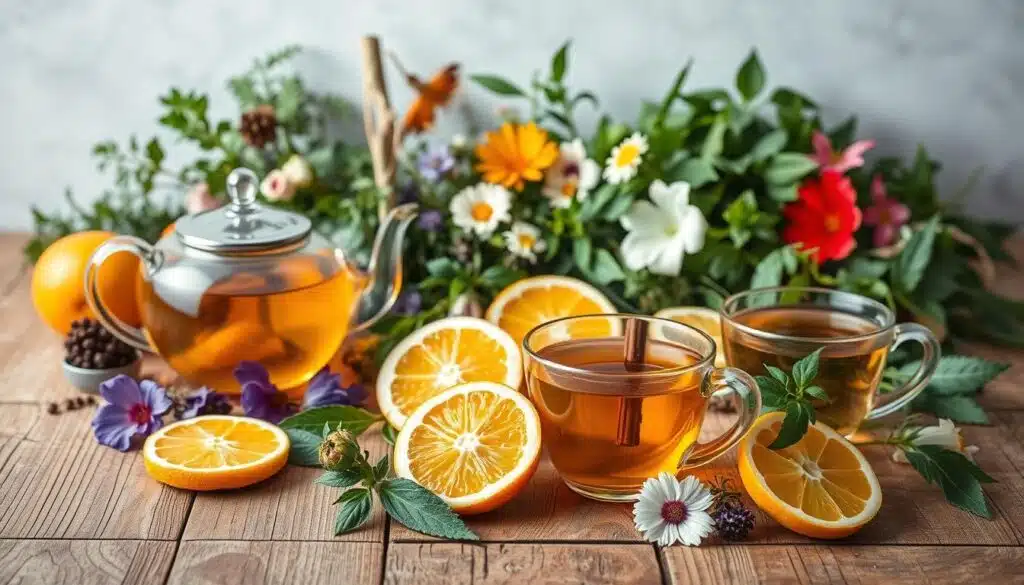
What the term means and why it matters
These beverages include green tea, chamomile tea, and hibiscus tea. They are rich in catechins, flavonoids, and vitamin C.
Drinking it regularly and using it topically, if recommended, offers many benefits. It's crucial to understand what each plant offers to choose the best option for your skin.
General benefits of teas for skin health
Teas do more than just moisturize your skin. They combat aging and boost collagen production.
Some teas, such as green and chamomile, reduce redness and soothe the skin.
Rooibos increases skin firmness, while hibiscus and rosehip help with cell renewal and healing.
How to integrate teas into your daily routine for visible results
Incorporating tea into your routine is easy. Drinking 1 to 2 cups a day is a good start.
- In the morning: green tea, pure or with ginger, to detoxify and protect.
- Before bed: chamomile for recovery and restful sleep.
- Cold chamomile compresses: relieve dark circles and puffiness.
- Homemade masks: use concentrated infusions with honey or clay to enhance results.
- Rosehip compresses: applied to scars, they help with regeneration.
Combine this with your regular skincare routine to maximize the benefits. Maintaining a routine is what truly improves your skin.
Main active compounds in teas that benefit the skin
Teas are rich in substances that improve skin health. They help fight aging, heal wounds, and add shine. I'll tell you about the main substances found in teas.
Antioxidants
- Green tea's catechins fight free radicals. This reduces signs of aging and protects against sun damage. They maintain collagen and elastin, which are important for the skin.
- The antioxidants in white and green tea protect cells and keep skin healthy.
- Flavonoids combat oxidative stress, resulting in smoother, wrinkle-free skin.
Essential vitamins and minerals
- Vitamin C in teas like hibiscus helps skin produce more collagen and renew cells. This leaves skin firm and reduces blemishes.
- The zinc in rooibos tea helps control oiliness. It heals and keeps skin hydrated. Zinc is vital for healing minor cuts and regulating skin oil.
- B vitamins and minerals make skin brighter and more resilient.
Anti-inflammatory and healing properties
- Chamomile, ginger, and black tea contain compounds that reduce redness, swelling, and signs of fatigue.
- Rosehip is excellent for skin regeneration. It helps with healing and reduces blemishes after inflammation.
- Ginger improves circulation in the area and aids recovery. It's great for scarred or sensitive skin.
Green tea and its antioxidant effects on the skin
Green tea is famous for its antioxidant effects, which are beneficial for the skin. It helps protect against external aggressions, keeping skin beautiful and healthy.
Catechins and free radical protection
The catechins in green tea, such as EGCG, fight free radicals. They prevent damage to collagen and skin cells.
They also reduce oxidative stress, helping to slow aging and protect the skin from the sun, along with sunscreen.
Reduced inflammation and improved texture
Green tea has anti-inflammatory effects, reducing redness and irritation. The flavonoids it contains improve microcirculation and skin elasticity.
With continued use, skin becomes smoother and less prone to inflammation. This is especially beneficial for sensitive or acne-prone skin.
Ways of consumption and tips to enhance effects
- Drinking one cup in the morning and another in the afternoon helps maintain the effects of green tea.
- Mixing with mint or ginger adds benefits, but be careful with the caffeine.
- Choose good quality leaves and infuse between 70°C and 80°C to preserve the catechins.
- For external use, cold compresses or masks with tea and clay soothe and protect the skin.
Adding green tea to your skincare routine brings benefits inside and out. Using quality leaves and brewing it correctly makes all the difference.
Chamomile tea for sensitive and irritated skin
Chamomile is a great help for sensitive skin. It contains substances that soothe redness and discomfort. If you enjoy natural treatments, chamomile tea for sensitive skin is easy and inexpensive.
Calming and anti-inflammatory action
Studies show that chamomile combats inflammation and mild irritation. Regular use leaves skin less irritated and itchy.
Topical use: soothing compresses and masks
To use, brew a strong tea and let it cool. Use a cloth or gauze to apply it to your skin for 10 to 15 minutes.
- Simple compress: place on the swollen or irritated area twice a day.
- Tea bags: after cooling, place over your eyes to reduce puffiness.
- Gentle mask: Mix with honey or white clay. Leave on for a short time.
Best practices and contraindications
Drinking chamomile tea at night helps you relax and your skin recover. Products with chamomile, honey, and vanilla are also good. But it's best to use them frequently.
- Before applying it to your skin, test it on a small area of your skin.
- Do not apply to wounds without talking to a doctor.
- Discontinue use if you are allergic to the Asteraceae family.
Use chamomile compresses and herbal teas gently. Choose natural products to avoid reactions. Dermatologists at the Brazilian Society of Dermatology (SBCP) recommend consulting a specialist if problems persist.
Rooibos: cell renewal and imperfection control
Rooibos is great for the skin, being gentle and effective. It contains minerals and acids that heal and control oiliness. If you drink the tea regularly, you'll notice smoother, more radiant skin.
See below how rooibos can improve your beauty care.
Zinc and natural alpha-hydroxy acids for skin health
The zinc in rooibos helps improve skin and control oiliness. It's essential for repairing damage and regulating sebum.
Naturally occurring alpha hydroxy acids are great for renewing skin cells. They remove dead skin cells and prevent pores from clogging.
Benefits for firmness and shine
Rooibos' antioxidants combat fatigue and improve skin texture, leaving skin firmer and brighter naturally.
These nutrients help plump the skin and maintain hydration throughout your daily routine.
How to prepare and combine with other ingredients
- Basic Infusion: Use hot water and let it steep for 6 to 8 minutes to release minerals.
- For flavor and satiety: add cinnamon sticks during infusion.
- Topical use: Mix rooibos powder with honey, clay or vegetable oil for nourishing masks.
- Regular consumption: integrate rooibos for skin to the daily habit enhances the effects of rooibos cell renewal.
By using rooibos both internally and topically, you'll maximize its benefits. Experiment with different recipes, and if you have any questions, consult a dermatologist.
Hibiscus and collagen stimulation for greater firmness
Hibiscus has two important properties. It nourishes from the inside out and acts directly on the skin. The plant is rich in natural components, promotes collagen production, and makes skin more elastic. Drinking hibiscus tea and using topical products enhances its effects.
Vitamin C and cell renewal
Hibiscus contains vitamin C, which helps increase collagen production. This helps skin renew faster, leaving it firmer and more toned.
Drinking the infusion daily improves skin from within. Using products with vitamin C on your skin has even greater benefits, especially for mature skin.
Reduction of blemishes and uniformity of tone
The natural acids in hibiscus provide gentle exfoliation. This helps reduce blemishes and evens out skin tone with continued use.
For best results on blemishes, combine the tea with topical treatments. Results appear gradually and are gentle on the skin.
Hibiscus infusion and mask recipes
- Basic infusion: 1 tablespoon of hibiscus flower in 200 ml of hot water. Let steep for 10 minutes, strain, and drink.
- Facial toner: prepare a concentrated infusion, let it cool and apply with a cotton ball after cleansing.
- Homemade mask: 1 tablespoon of concentrated infusion, 1 tablespoon of white clay, and 1 teaspoon of honey. Mix until a paste forms and apply for 10–15 minutes.
Use these practical hibiscus recipes to care for your skin. hibiscus mask renews and moisturizes, good for not very sensitive skin.
Rosehip and regenerative properties for scars
Rosehip is rich in essential fatty acids and vitamin A. These components help regenerate the skin. Studies indicate that continued use improves skin uniformity and reduces blemishes. This makes rosehip a valuable ally for those seeking skin recovery.
Action in healing and reducing blemishes
Rosehip oil renews skin cells and reduces scars. Its application makes skin more elastic and radiant. Additionally, rosehip tea, rich in antioxidants, helps in skin regeneration from the inside out.
Internal use versus topical application
Drink rosehip tea Provides vitamin C and polyphenols, protecting the skin. Topical applications, such as oils and masks, show faster results. Combining the two methods enhances the effects without increasing risks, if used in moderation.
Precautions and synergies with other treatments
Consult a doctor before combining rosehip with other skin treatments. Do not apply to open wounds without guidance. Using rosehip with chamomile soothes the skin, and using it with mild acids requires supervision to avoid irritation. Incorporating it into daily skin care routine enhances the effectiveness of regeneration.
FAQ
What does it mean to say that teas and infusions help skin health and why does this matter?
What are the general benefits of teas for the skin?
How to integrate teas into your daily routine to see results?
What are the main active compounds in teas that benefit the skin?
How do catechins and other antioxidants protect the skin?
Which vitamins and minerals in teas are important for the skin?
What anti-inflammatory and healing properties do teas have?
How does green tea improve skin texture and inflammation?
What is the best way to consume green tea to maximize its benefits?
Why is chamomile suitable for sensitive skin and how to use it topically?
What precautions and contraindications should be taken when using chamomile?
What makes rooibos special for cell renewal and blemish control?
How to prepare rooibos for topical and internal use?
How does hibiscus help stimulate collagen and reduce blemishes?
What are some safe homemade recipes with hibiscus for your skin?
How does rosehip work on scars and blemishes?
When should I use rosehip orally or topically?
What precautions should be taken when combining teas with dermatological treatments?
How to balance tea consumption considering caffeine and adverse effects?
Are there commercial blends recommended for flavor and skin benefits?
What daily practices combine best with the use of teas to obtain visible results?
Content created with Artificial Intelligence Assistance