
O colágeno natural é muito importante para o nosso corpo. Ele ajuda na firmeza da pele e suporta partes vitais como cartilagens e tendões.
Este texto fala sobre como você pode adicionar mais colágeno à sua dieta. Vamos explorar opções como carnes, frutos do mar, gelatina e caldo de ossos.
Ads
Também vamos ver como nutrientes como vitamina C ajudam na produção de colágeno. E mencionamos a suplementação como uma opção, sempre com conselho de um profissional.
Se você quer melhorar a pele e cuidar das articulações, este artigo é para você. Lembre-se, depois dos 30 anos, é chave cuidar da alimentação para manter o colágeno.
Alimentos naturais ricos em colágeno
O colágeno ajuda a pele a ficar firme e as articulações a se moverem. Conforme envelhecemos, perdemos colágeno. Isso acontece por causa do sol, poluição, cigarro e estresse. Saber disso nos ajuda a escolher alimentos que mantenham nossa saúde.
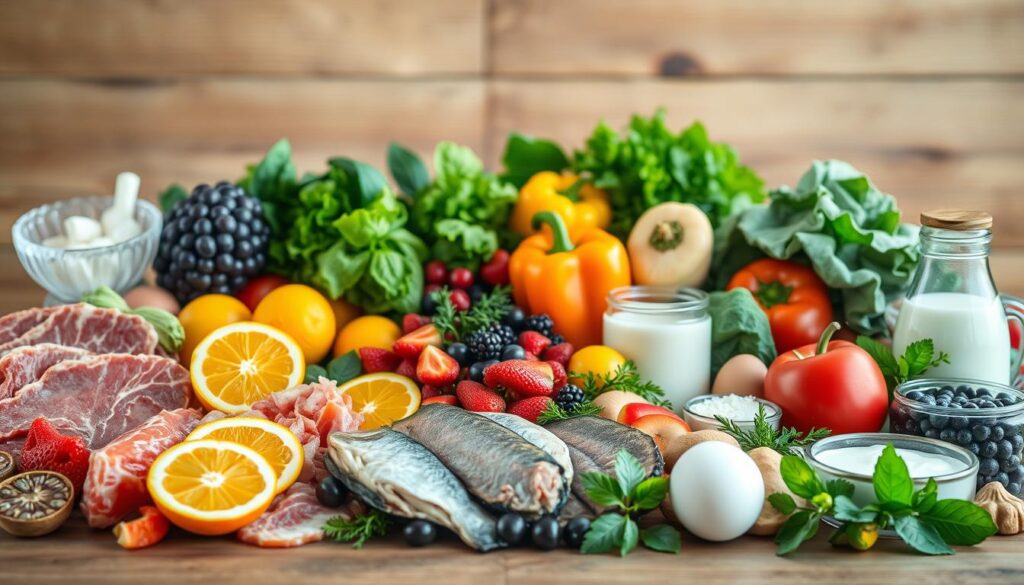
Definição e importância do colágeno na dieta
O colágeno é uma proteína vital para a pele, cartilagens e tendões. Ele dá elasticidade e força. Nossa alimentação nos dá colágeno e aminoácidos, ajudando na sua reposição.
Saber sobre colágeno ajuda a manter a juventude da pele e a saúde das articulações. Comer bem ajuda no tratamento médico e previne desgaste.
Fontes alimentares diretas de colágeno
Carne bovina, suína, aves e peixes são ricos em colágeno. Eles têm peles, ossos e cartilagens valiosas para nós. Frutos do mar, como camarão e ostras, também são bons.
- Frutos do mar: camarão, lula, ostras e mexilhões contêm proteínas que complementam o colágeno.
- Vísceras: coração, intestino e fígado têm quantidades apreciáveis e outros nutrientes.
- Gelatina, geleia de mocotó e caldo de ossos são formas práticas de concentrar colágeno na dieta.
Como combinar alimentos para otimizar a absorção
Precisamos de vitamina C para absorver colágeno. Frutas como laranja e kiwi, além de vegetais verdes, são muito importantes.
Zinco e selênio também são essenciais. Eles estão presentes em carnes, sementes e castanhas. Aveia e arroz integral têm silício, que ajuda.
- Combine alimentos que contêm colágeno com fontes de vitamina C em cada refeição.
- Inclua sementes e castanhas para zinco e selênio.
- Misture proteínas animais a vegetais antioxidantes para reduzir degradação e melhorar absorção de colágeno.
Juntar carne ou caldo de ossos com salada de frutas cítricas ou brócolis aumenta os nutrientes disponíveis. Assim, o colágeno dos alimentos ajuda mais na saúde da pele e articulações.
Carne bovina e cortes ricos em colágeno
A carne bovina é ótima para obter colágeno, escolhendo-se as partes certas. Cortes com mais tecido conjuntivo e ossos são melhores. Eles ficam como gelatina ao cozinhar e ajudam a pele e as articulações.
Partes com maior concentração de colágeno
As partes como cartilagens, peles e ossos têm mais colágeno. A cartilagem, por exemplo, solta colágeno quando cozida devagar.
Tutano e medula são cheios de gelatina. Mas músculos têm bem menos colágeno, sendo os cortes magros menos eficazes.
Exemplos de cortes recomendados e modos de preparo
Cortes como peito, acém e paleta são ricos em tecido conjuntivo. Cozinhar lentamente em fogo baixo é o ideal. Isso tira colágeno da carne e a deixa macia.
- Ensopado longo: acém ou peito cozidos por horas soltam gelatina.
- Caldo de carne: ossos e cartilagens fervidos fazem um caldo nutritivo.
- Mocotó e geleia: são feitos com ossos e ligamentos para obter bastante colágeno.
Benefícios para pele e articulações
O colágeno da carne bovina ajuda a pele a ficar firme e elástica. É bom comer regularmente, pois traz aminoácidos que consertam tecidos.
Pesquisas mostram que ele pode diminuir dores de artrose. Isso porque o caldo de ossos ou cortes ricos em colágeno nutrem as articulações.
Carne de porco, gelatina e geleia de mocotó
A carne de porco é rica em colágeno, encontrado na pele, cartilagens e cortes menos magros. Muitos escolhem a carne suína rica em colágeno para comer de forma saudável. Eles preferem cozinhar lentamente em assados, cozidos e caldos. Esses métodos ajudam a liberar a gelatina, tornando a comida mais nutritiva.
Cozinhar da maneira certa é importante. Quando você cozinha por mais tempo em fogo baixo, o colágeno vira gelatina. Essa gelatina se mistura ao caldo e à carne. Pratos como a feijoada, que leva pele de porco, e a costela cozida se beneficiam bastante desse processo.
A gelatina é uma maneira fácil e variada de adicionar colágeno ao dia a dia. É feita fervendo ossos, peles e cartilagens. Você encontra a gelatina em sobremesas, pudins ricos em proteínas e outros pratos. Tanto receitas de casa quanto industriais usam gelatina.
- Vantagens: fácil digestão e uso em receitas diversas.
- Como consumir: em iogurtes, cremes e sobremesas proteicas.
- Cuidados: optar por produtos sem excesso de açúcares adicionados.
A geleia de mocotó é um prato tradicional no Brasil. É feita de tutano e tecido dos ossos que se gelatiniza. A geleia é nutritiva e sempre foi usada para ajudar as articulações. Buscar geleia de mocotó para benefícios significa encontrar histórias de como ela ajuda a pele e a movimentação.
Mocotó é conhecido como um prato rico em colágeno natural. Ele é feito para ser aproveitado em caldos e sobremesas que dão energia. Você pode encontrar versões caseiras em mercados e feiras, que são feitas sem aditivos.
Para usar essas fontes de colágeno no dia a dia, misture pratos de carne suína com caldos ricos em gelatina. E adicione geleia de mocotó aos preparos. Assim, você desfruta das várias formas de colágeno, com diferentes texturas e sabores.
Frango e caldo de ossos como fontes concentradas
O frango é uma ótima fonte de colágeno. Para quem busca colágeno, cozinhar frango em casa é um jeito fácil de comer mais proteínas e aminoácidos importantes.
Certas partes do frango têm mais colágeno, principalmente se o frango for mais velho. Pés, pescoço e cartilagens são ricos em tecido conjuntivo. Essas partes são perfeitas para quem quer usar colágeno de frango em várias receitas.
Ao fazer caldo de ossos em casa, cozinha-se os ossos e cartilagens devagar. Esse processo solta colágeno tipo I, além de glicina, prolina e minerais importantes. Estes nutrientes ajudam a manter a pele firme e hidratada, fortalecem as articulações e podem proteger o intestino.
- Tempo longo de cozimento: essencial para extrair colágeno.
- Adição de vinagre: ajuda a liberar minerais dos ossos.
- Uso de partes ricas: incluir pés e pescoço otimiza o rendimento.
Beber regularmente caldo de ossos traz vários benefícios. A pele fica mais elástica e as articulações mais fortes. Tomar uma xícara quente de manhã é um jeito simples de aproveitar esses nutrientes.
Para adicionar caldo na sua alimentação, use-o em sopas, risotos, molhos e ensopados. Isso ajuda a aumentar seu consumo de colágeno sem mudar muito sua dieta.
- Substitua água por caldo em receitas de arroz e risoto.
- Use caldo concentrado para reduzir sal sem perder sabor.
- Congele porções em formas de gelo para adicionar a pratos rápidos.
Fazer pequenas alterações pode tornar fácil e gostoso usar caldo de ossos caseiro. Assim, o colágeno do frango vira um ingrediente comum nas suas refeições.
Peixes, frutos do mar e colágeno marinho
O colágeno marinho é ótimo para a pele e articulações. Em peixes e frutos do mar, encontramos essa proteína em partes menos usadas. Adicioná-las em receitas simples eleva sua biodisponibilidade.
A pele dos peixes é uma fonte direta de colágeno. Cozinhar pescados com pele e ossos em caldos ou assados libera o colágeno.
Adicionar pele e ossos em sopas aumenta o aporte de colágeno sem mudar o gosto. É um jeito eficaz de obter colágeno mais absorvível.
Camarão, lula, ostras e mexilhões
Crustáceos e moluscos são ricos em colágeno. Tanto camarões quanto lulas têm muita proteína em sua carne.
As ostras e mexilhões contêm muita proteína na forma de colágeno. São boas escolhas para quem não come carne de terra.
Salmão e peixes ricos em ômega-3
O salmão se destaca pelo colágeno na pele e alto teor de ômega-3. Atum e cavala têm perfis nutricionais parecidos.
Os ácidos graxos ômega-3 diminuem a inflamação e ajudam na saúde da pele e articulações. Comer esses peixes regularmente traz benefícios contínuos.
- Inclua pele de peixe colágeno em caldos e assados sempre que possível.
- Intercale camarão, lula e moluscos para variar fontes de frutos do mar colágeno.
- Prefira salmão e peixes ricos em ômega-3 para combinar colágeno marinho com ação anti-inflamatória.
Vísceras e outras partes animais ricas em colágeno
As vísceras são uma fonte rica em proteínas e colágeno, mas nem todos conhecem esse benefício. Elas podem tornar nossa alimentação mais rica em textura e nutrientes. Vamos explorar os tipos, como prepará-las e seus benefícios além do colágeno.
Tipos de órgãos com alto teor de colágeno
O coração tem muita proteína e fibra. Ele é muito apreciado na culinária por seu colágeno.
Intestinos e tecidos conectivos têm bastante colágeno quando cozidos. O fígado, apesar de ter menos colágeno, é muito importante na dietas ricas nesta proteína.
Como preparar e consumir de forma segura e saborosa
É essencial limpar bem e verificar a origem das vísceras. Cozinhar por um bom tempo é a chave para a segurança e para manter a carne macia.
- Ensopados lentos destacam o colágeno e deixam as fibras mais tenras.
- Patês e farsas são ótimos para quem quer evitar texturas muito marcantes.
- Moer e adicionar às massas ou bolos salgados pode ser uma maneira saborosa de incluir vísceras na dieta.
Caso tenha dúvidas sobre como começar, experimente receitas simples. Um cozido lento ou patê de fígado com cebola são boas escolhas. Sempre confira se a comida foi bem cozida e atingiu a temperatura segura.
Valor nutricional além do colágeno
Vísceras são ricas em ferro, vitaminas do complexo B e vitamina A, especialmente o fígado. Esses nutrientes tornam o colágeno ainda mais benéfico para a pele, energia e sistema imunológico.
Comer de forma moderada e variada garante os nutrientes de forma equilibrada. Conhecer o que as vísceras oferecem ajuda a montar pratos completos.
Alimentos que estimulam a produção de colágeno
Comer bem ajuda a manter pele, articulações e tecidos conjuntivos saudáveis. É bom escolher alimentos que aumentam a produção de colágeno. Uma dieta balanceada une proteínas a nutrientes que melhoram essa produção.
Vitamina C
- A vitamina C é vital para fazer colágeno. Frutas como acerola, laranja e kiwi são ricas nesse nutriente.
- Brócolis e agrião também são bons. A vitamina C protege as fibras do colágeno de se oxidarem.
- Comer frutas cítricas com proteína ou gelatina ajuda ainda mais na produção de colágeno.
Zinco e selênio
- Zinco e selênio são importantes para criar colágeno. Carnes e ostras têm muito zinco.
- Selênio vem de castanha-do-pará e sementes de girassol. Sementes de abóbora e nozes também ajudam.
- Misturar fontes de zinco com frutas ricas em vitamina C é ótimo para a produção do colágeno.
Silício e outros cofatores
- Silício é bom para os tecidos conectivos. Está em aveia, agrião e algas marinhas.
- Adicionar silício na alimentação melhora as fibras de colágeno, especialmente com aminoácidos de carnes e peixes.
- Planejar refeições que juntam proteínas, vitamina C e silício é chave para estimular a produção de colágeno.
Alterações simples, como suco de acerola com salada de ostras ou mingau de aveia com frutas cítricas, fazem a diferença. Tornam a alimentação estratégica, prática e deliciosa.
Alimentos vegetais que protegem e potencializam o colágeno
Vegetais e frutas são aliados na proteção do colágeno. Eles combatem radicais livres e trazem vitaminas e minerais essenciais. Combiná-los com fontes animais de colágeno melhora a pele e as articulações.
Vegetais verdes e frutas vermelhas
Espinafre, couve e brócolis têm clorofila, ferro e vitamina C. Morangos, framboesas e mirtilos são ricos em antioxidantes. Eles ajudam a prevenir a degradação do colágeno.
- Vitamina C ajuda a criar colágeno e atua como antioxidante.
- Clorofila melhora a elasticidade da pele e suporta o tecido conjuntivo.
Nozes e sementes: gorduras e proteção
Amêndoas, castanhas-do-pará, chia e linhaça são fontes de vitamina E, zinco e ômega-3. Esses nutrientes protegem as células e combatem a oxidação.
- Sementes como chia e linhaça protegem o colágeno com minerais.
- Gorduras saudáveis facilitam a absorção de vitaminas que fortalecem a pele.
Como montar pratos que combinam proteína animal e vegetais
Combinar carnes que contêm colágeno com saladas e legumes é eficaz. Prepare refeições que reúnem nutrientes para manter o tecido conjuntivo.
- Uma sugestão é salmão grelhado com salada de agrião, laranja e quinoa. Essa mistura é rica em vitamina C e silício.
- Outra boa escolha é ensopado de carne com brócolis e arroz integral. O caldo de ossos e vegetais trazem colágeno e antioxidantes.
Opte por refeições coloridas e diversas para proteger o colágeno constantemente. A combinação de proteínas e vegetais otimiza a absorção dos nutrientes. Isso dá suporte duradouro ao tecido conectivo.
Quando considerar suplementos e como complementar pela alimentação
Suplementos são úteis para quem precisa mais de colágeno devido a perda de massa ou dores nas articulações. Antes de usar, lembre-se de comer bem, com muitos alimentos naturais. Só use suplementos de colágeno quando um profissional recomendar.
Casos como cabelos fracos, rugas, osteoporose e artrose indicam a necessidade de colágeno hidrolisado. Estudos mostram seus benefícios na pele e nas articulações.
Existem diversos tipos de suplementos de colágeno. O mais comum é o hidrolisado. Verisol ajuda na firmeza da pele. E tem o Colflex, que combina colágeno com nutrientes para as articulações.
Na hora de escolher, pense em como vai usar. Pó mistura bem em líquidos e receitas; cápsulas são boas para levar em viagens. Produtos com vitaminas ou minerais podem ser mais benéficos.
- Verifique a dose por porção e a origem do colágeno.
- Prefira produtos com testes de pureza e rotulagem clara.
- Analise a presença de peptídeos com evidência, como Verisol, quando a meta for pele.
Converse com um médico ou nutricionista antes de decidir. Eles vão olhar para suas necessidades e ajustar as doses. Isso ajuda a evitar problemas, como interações medicamentosas ou efeitos em quem tem insuficiência renal. Não tome por conta própria e não troque comida de verdade por suplementos.
Se decidir usar, fique de olho nos resultados e mantenha uma alimentação rica em vitamina C, zinco e proteínas. Os suplementos de colágeno funcionam melhor quando acompanhados de um estilo de vida saudável.
Estilo de vida e hábitos que preservam o colágeno
O colágeno começa a diminuir quando chegamos aos 30–35 anos. Ele fica mais lento depois dos 45. Fazer pequenas mudanças todos os dias pode manter o colágeno por mais tempo. Essas mudanças incluem cuidados com a pele e escolher bem o que comer, para proteger nossa matriz de proteínas.
Fatores que aceleram a perda
- Radiação UV: se expor sem proteção danifica as fibras de colágeno.
- Tabagismo: a fumaça tem toxinas que danificam a pele.
- Poluição e estresse oxidativo: radicais livres prejudicam proteínas e fibras.
- Consumo excessivo de açúcar e álcool: causam glicação e inflamação.
Medidas para retardar a perda
- Ter um sono reparador ajuda na reparação celular e na síntese de proteínas.
- Exercitar-se de forma moderada aumenta a produção de colágeno.
- Diminuir a exposição ao sol e usar filtro solar todos os dias previne a degradação.
- Parar de fumar e beber menos álcool também ajudam a preservar o colágeno.
Dicas práticas para proteger o colágeno diariamente
- Adicionar à dieta caldo de ossos, salmão com pele e gelatina ajuda na quantidade de colágeno.
- Comer frutas cítricas, vegetais verdes e castanhas traz vitamina C, E e selênio.
- Escolha alimentos com antioxidantes, como frutas vermelhas e chá verde, que ajudam o colágeno.
- Beber bastante água e reduzir o açúcar refinado combate a glicação.
- Quando necessário, a suplementação pode ser considerada, com orientação de um nutricionista.
Adotar hábitos saudáveis protege o colágeno e torna a vida melhor. Dormindo bem, comendo de forma equilibrada e protegendo-se do sol, prevenir a perda de colágeno fica mais fácil ao longo dos anos.
Conclusão
Este texto mostra que carnes, peixes e frutos do mar são ricos em colágeno. Também diz que gelatina e caldo de ossos contêm bastante. Até frutas cítricas, como acerola e agrião, ajudam na nutrição com colágeno. Eles trazem vitaminas e minerais importantes.
Para ter colágeno e saúde, misture fontes de colágeno com vitamina C. Comer bem é crucial. Além disso, cuidar da pele, dormir bem, fazer exercícios, e evitar fumar e beber ajuda muito.
Antes de pensar em suplementos, fale com um especialista. Eles podem ajudar a escolher o melhor tipo de colágeno, como Verisol ou Colflex. Um plano feito para você traz os melhores benefícios para sua saúde.
FAQ
O que é colágeno e por que ele é importante para minha pele e articulações?
O colágeno é a principal proteína do corpo. Ele dá firmeza e elasticidade para a pele. Também sustenta as cartilagens, tendões e ligamentos. Com o envelhecimento, a produção de colágeno diminui. Isso pode causar flacidez, rugas e problemas nas articulações.
Quais são as principais fontes alimentares naturais de colágeno?
Carnes, como bovina e suína, e frango (principalmente pés, pescoço e cartilagens) são ótimas fontes. Peixes, frutos do mar, vísceras e gelatina também são ricos em colágeno. Caldo de ossos é uma das melhores fontes, especialmente de colágeno tipo I.
Como devo combinar alimentos para otimizar a síntese de colágeno?
Junte fontes de colágeno animal com alimentos ricos em vitamina C e minerais. Coma frutas cítricas, brócolis e alimentos ricos em zinco e selênio. Incluir silício, de aveia e arroz integral, também ajuda. Antioxidantes em vegetais protegem o colágeno.
Quais cortes de carne bovina têm mais colágeno e como prepará-los?
Acém e peito têm bastante colágeno por causa do tecido conjuntivo. Cozinhe esses cortes lentamente, como em ensopados, para extrair a proteína. O tutano e ossos também são boas fontes de colágeno.
A carne suína contém colágeno? Como aproveitar na cozinha?
Sim, a carne de porco tem colágeno. Assados lentos e caldos são boas maneiras de aproveitá-lo. Pratos tradicionais, como ensopados e feijoadas, também são ótimos.
Gelatina e geleia de mocotó realmente ajudam a repor colágeno?
Sim. Gelatina e geleia de mocotó são ricas em colágeno. Incluir esses alimentos na dieta pode melhorar a firmeza da pele e a saúde articular.
Quais partes do frango têm mais colágeno e o que fazer com elas?
Pés, pescoço e cartilagens de frango são ricos em colágeno. Fazer caldos e sopas com essas partes ajuda a aproveitar o colágeno. Esses pratos são fáceis de consumir regularmente.
Como preparar caldo de ossos em casa e quais são seus benefícios?
Ferva ossos com água, vinagre e legumes por várias horas. Isso extrai colágeno, aminoácidos e minerais. Beber esse caldo ou usá-lo em receitas melhora a pele e as articulações. Também beneficia a saúde intestinal.
O colágeno marinho é diferente do colágeno de terra? Quais as vantagens?
Sim, o colágeno marinho tem melhor absorção e é rico em ômega-3. Peixes como salmão, atum e cavala reduzem inflamações. Isso ajuda na saúde da pele e das articulações.
Frutos do mar como camarão, lula, ostras e mexilhões são boas fontes de colágeno?
Sim. Eles têm colágeno na carne. Ostras também têm muito zinco, que é importante para a síntese de colágeno.
Quais vísceras têm mais colágeno e como consumi-las com segurança?
Coração, intestino e fígado têm bastante colágeno. Escolha fontes seguras, lave bem e cozinhe completamente. Prepare em ensopados ou patês para melhor sabor.
Além do colágeno, que nutrientes importantes encontro nas vísceras?
Vísceras são fontes de ferro, vitaminas B e vitamina A. Esses nutrientes ajudam na saúde geral e no aproveitamento do colágeno.
Quais são os principais cofatores nutricionais para a síntese de colágeno?
Vitamina C, zinco, selênio e silício são fundamentais. Coma acerola, kiwi, brócolis, ostras e sementes para obter esses nutrientes.
Vegetais e frutas têm papel na proteção do colágeno?
Sim. Consuma vegetais verdes e frutas vermelhas por suas vitaminas C e antioxidantes. Nozes e sementes também ajudam a proteger o colágeno.
Como montar pratos práticos que maximizem a síntese e proteção do colágeno?
Misture fontes de colágeno com alimentos ricos em vitaminas e minerais. Por exemplo, salmão grelhado e salada com agrião e laranja. O caldo de ossos pode ser usado em sopas e risotos.
Quando devo considerar suplementos de colágeno e quais tipos existem?
Suplementos podem ser úteis para problemas capilares ou articulares. Existem tipos como colágeno hidrolisado e peptídeos bioativos. É importante consultar um especialista antes de começar a suplementação.
Como escolher a forma de suplemento: pó, cápsulas ou formulações combinadas?
Escolha com base em necessidades individuais e orientação profissional. Pós são versáteis; cápsulas são convenientes. Formulações combinadas podem oferecer benefícios adicionais.
Quais fatores aceleram a perda de colágeno e como evitá-los?
Proteja-se do sol, não fume, reduza o consumo de álcool e açúcar. Boa noite de sono e exercício regular também são essenciais. Essas práticas ajudam a preservar o colágeno.
Que hábitos diários ajudam a preservar o colágeno?
Durma bem, exercite-se, hidrate-se e use protetor solar. Coma bem e evite hábitos prejudiciais como fumar e bebidas em excesso. Essas ações retardam a perda de colágeno.
Existe diferença no colágeno entre carnes e peixes quanto à absorção?
Peptídeos de colágeno de peixes, especialmente com ômega-3, são melhor absorvidos. Isso traz benefícios extras para pele e articulações.
Posso obter colágeno suficiente apenas pela alimentação ou preciso suplementar?
Dieta diversa costuma fornecer colágeno suficiente. Suplementação pode ser considerada em casos específicos, conforme recomendação profissional.
Quais cuidados devo ter antes de iniciar suplementação de colágeno?
Consulte um profissional para entender suas necessidades e possíveis interações. Priorize uma dieta equilibrada e adicione suplementos conforme indicação.
Como incorporar caldo de ossos na rotina sem mudar muito a alimentação?
Consuma caldo de ossos morno diariamente ou use-o em receitas. Ele é prático e aumenta o colágeno sem mudar muito sua dieta.
O consumo de salmão e outros peixes deve ser frequente para obter benefícios combinados?
Comer peixes como salmão duas a três vezes por semana é ideal. Eles fornecem colágeno e ácidos graxos que ajudam na saúde.
Há contraindicações alimentares ou riscos ao consumir muitas fontes animais de colágeno?
Uma alta ingestão de fontes animais pode aumentar calorias e gorduras não saudáveis. Consulte um especialista para ajustar sua dieta se necessário.
Devo procurar quais profissionais para orientação sobre colágeno na dieta ou suplementação?
Um nutricionista e um médico podem ajudar com alimentação e suplementação. Eles avaliarão sua saúde e necessidade de colágeno.
Content created with the help of Artificial Intelligence.