
Find your match! What do you want? know?
LGBT dating apps are important in many people's lives. Sites like Grindr, Hornet e HERE are trending. They're also popular on Tinder, OkCupid, and others. They're used in both Rio and São Paulo.
Advertisements
Studies show that more gays and lesbians are using these sites. A Bumble study says that 53% of LGBTQIA+ singles use apps. This is higher than the 40% among heterosexuals. Pew Research shows an increase of up to 400% in some regions.
The text will discuss how apps help with online dating. It will show you how to choose people based on your interests and feel safe. We'll also discuss risks, such as violence and scams.

Grindr
Why use LGBT dating apps
LGBT dating apps have changed how we connect. They offer search, identity filters, and spaces for interaction. Let's explore what they are and how they work in the world. We'll also understand why they're important to the community.
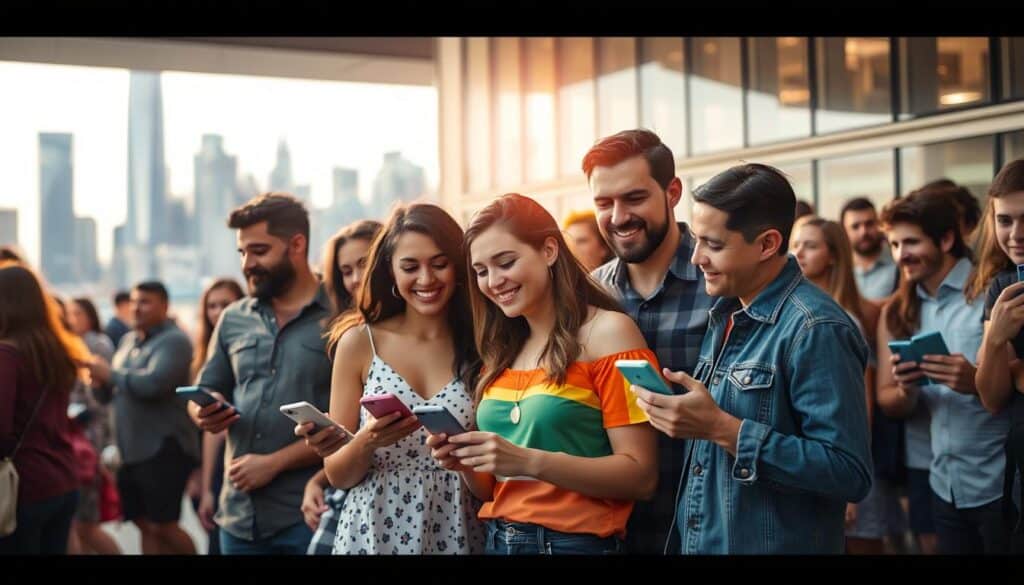
Definition and scope of apps
LGBT apps are platforms for the LGBT community. Some examples are Grindr, Hornet e HEREThere are also services like Tinder and OkCupid that have features for us.

Hornet
There are apps for casual encounters and serious relationships. Some focus on local experiences, while others create online communities and events.
Worldwide usage data
Statistics show that the use of these apps is on the rise. A Bumble survey found that 53% of LGBTQIA+ singles use these apps.
Why the topic matters to the community
LGBT apps help create safe spaces. They serve as a refuge from violence and prejudice. Research shows how important they are.
They provide anonymity, access to information, and contact with other LGBT people. This is especially helpful for teenagers and those living where there is no LGBT support. This support is crucial for the community.

Here
Advantages of apps for finding people in the community
Dating apps have changed the way we meet new people. They offer ways to filter and find more meaningful connections. This helps simplify the search and reduces anxiety when starting conversations.
Pre-selection by interests and identity
Many apps offer the option to choose interests and identities upfront. This includes search queries, sexual preferences, and fetishes. This process ensures direct conversations from the start.
According to psychologist Daiane Daumichen, choosing filters and preferences makes the first date more relaxed. People can open up gradually, as they feel more confident.
Access to profiles with relevant information
Information such as marital status, age, ethnicity, and what the person is looking for is included in profiles. These details make profiles clearer and more aligned with expectations.
Apps like Grindr and OkCupid ask for details to create better matches. This has reduced time wasted on fruitless conversations.
Greater variety of options outside the usual social circle
Platforms increase the chance of meeting people outside our usual circle. Those who live in big cities talk about making connections with specific interests.
This variety allows for experimenting with different relationships and finding support groups. This helps strengthen identity and mutual support.
Apps as safe spaces and anonymity
Dating apps have changed the way LGBTQIA+ people meet new people. They offer a safe space, unlike public spaces dominated by heteronormative rules. This is very common in places like bars and streets.
Perception of security according to researchers
According to studies, such as those conducted by Paulo Faltay of MediaLab, LGBT apps are seen as safe. They allow users to choose who to chat with, reducing the risk of unwanted exposure. This helps prevent embarrassing situations and violence.
Choosing the degree of exposure
Users decide how they appear on their profiles. It's common to hide your face, use fake names, or show only part of your photo. This practice ensures anonymity.
Details in bios and tags convey intentions without revealing everything about the person. Controlling what appears on your profile becomes a way to protect yourself and set boundaries.
Geolocation and proximity control
Features that show people nearby are useful. However, the need to protect privacy forces many to adjust how and when they appear.
In big cities like São Paulo, many people use the app to explore places before they go. The ability to manage geolocation usage increases the feeling of security, allowing for adjustments to meetings.
- Turn on private modes when you want to explore a new place.
- Use pseudonyms and partial photos to maintain anonymity.
- Review location permissions for your security.
- Adjust what you show on your profile according to the situation.
Ease of identity discovery and expression
Dating apps are places where many people experiment with new ways of expressing themselves and expressing themselves. Professionals like Alberto Bona, from UFRJ, see these platforms as a helpful tool for those discovering their LGBT identity. They provide opportunities to meet like-minded people and find valuable information.
Platforms as an instrument of affirmation
On these platforms, people can choose what they want to be called and describe who they truly are. This space reduces barriers and helps people assert themselves through profiles and groups that understand their story.
Adolescents and young people: access to information and peers
For younger LGBT people, seeing themselves in similar stories is essential. Many say apps were crucial for learning more about health, events, and finding support even before coming out.
A young man from Rio shared that at 16, he started using these apps to learn more about himself. This shows how important it can be to have a safe space to explore who we are.
Testimonials and real examples of use in the discovery process
Some people tell how apps were a true social laboratory. One example in São Paulo is someone who used descriptions and images to experiment before venturing into in-person dating.
- Test visual codes: emojis and short phrases help communicate practices and boundaries.
- Learn signals: STI warnings, “no cover” and drug-related icons appear on profiles.
- Building networks: groups and private messages offer support for questions and exchanges.
These stories teach us the importance of understanding the signs. Knowing these codes can protect us and help us better understand the LGBT community as we discover ourselves.
Main risks and challenges in LGBT apps
Dating apps have both good and bad sides. Let's talk about user experiences. They face discrimination and psychological problems when using these platforms.
Violence, scams and reported cases
- Grindr has been linked to cases of violence, which worries activists and safety experts.
- To protect themselves, users take precautions. They don't go to meetings alone and tell their friends.
- Fake profiles and scams are also common. They ask for money or bank transfers.
Reproduction of prejudices and exclusions
- Some bios display prejudice, such as rejection of fat people. This is body shaming on apps.
- Experts say apps foster prejudice. They reproduce sexism and homophobia.
- As a result, some people change their profiles. They avoid posting photos to avoid criticism.
Dependence, self-esteem and social comparison
- Layla Thamm talks about dependence and comparison. These affect self-esteem.
- Body-ideal culture and criticism worsen mental health. That's why it's important to talk about mental health and apps.
- Taking breaks is a good way to take care of yourself. It's also important to limit screen time and seek help if needed.
How to use apps safely
Using online dating apps requires caution. These simple steps help mitigate risks before meeting someone in person. They also protect your privacy on platforms like Grindr. Hornet, HERE and Tinder.
Tips before the first face-to-face meeting
Before scheduling a date, chat extensively on the app. Exchange messages for several days. If possible, make video or audio calls to confirm who the other person is.
Choose public, well-lit, and busy places to meet. Tell a trusted friend about your plans. Set a code word to communicate that you're safe after the meeting. Bringing personal safety equipment can also give you peace of mind.
How to protect personal data and maintain privacy
Don't share your address, workplace, or phone number right away. Choose a nickname to use on the app and be careful with your profile information.
- Check the app settings to see if geolocation and access to your photos are controlled.
- Use photos that are recent but don't show details of your home or daily routine.
- Adjust the app's privacy settings to further protect yourself.
- If you receive suspicious requests, end the conversation immediately and report it.
Signs of fake profiles and suspicious behavior
Be vigilant from the start. Notice the signs of a fake profile. These include a lack of real photos, stories that don't add up, or a rush to get your information.
- Be wary if the person avoids video calls and only wants text messages.
- Be cautious about requests to quickly provide your personal information or send money.
- Photos of poor quality or that appear to have been copied from elsewhere should raise suspicion.
- Watch out for inconsistencies in stories about work, where you live, or events.
Users have reported that some people pretend to be part of the LGBT community to cause harm. Keep these safety tips for first dates and practices for maintaining privacy when using apps in mind. This way, you reduce the risks.
Best practices for profiles and communication
When creating your profile on an LGBT app, be clear and respectful. A well-thought-out profile helps you find genuine connections and reduces confusion. Speak directly and display photos that truly represent you.
How to indicate intent
State what you're looking for on the app, such as a serious relationship, friendship, or something casual. This helps avoid misunderstandings and saves everyone time.
- Choose to mark the clear intentions offered by the application.
- If necessary, detail your intention in the profile description.
- By talking, you can also clarify your intentions right away.
Transparency about sexual health
Being open about STIs increases mutual safety and trust. Always respectfully discuss your status, your tests, and how you prevent them.
- Talk about how often you get tested and whether you use protection.
- If you encounter codes like “no cover,” discuss security before you meet.
- Including links to local health services can be helpful.
Being authentic and avoiding toxic patterns
Showing your true self attracts more genuine connections. Avoid overusing filters, using fake photos, and describing yourself inaccurately. Psychologists say being honest reduces anxiety and improves relationships.
- Talk about your real interests and your routine.
- Don't hide important information to appear more interesting.
- Show that you value the diversity of bodies and emotions, without promoting competition.
Practicing these tips creates a safer and more respectful space. By taking the time to create a clear profile, define your intentions, and be transparent about sexual health, you increase your chances of a positive experience.
Comparison: dedicated LGBT apps vs general apps
Choosing where to seek connections involves understanding the differences between apps. Dedicated and general apps have distinct focuses, communities, and features. This helps in setting expectations and developing strategies for meeting people, making friends, or finding support.
Advantages of dedicated apps
- Grindr and Hornet are platforms that bring together gay and bisexual men. They offer filters tailored to identities, preferences, and availability.
- HER is a platform designed for lesbian and bisexual women. It offers communities, events, and groups.
- Being part of a strong community helps foster mutual support. It also facilitates involvement in local activities and reduces the invisibility common in general apps.
Useful features of general apps
- Tinder, with its broad reach, is great for those seeking diversity. It's socially recognized and has a wide geographic reach.
- OkCupid uses surveys to find people with similar interests and values. It's ideal for those looking for more than just physical attraction.
- General apps allow you to meet people outside the LGBTQIA+ community. This increases your options and experiences.
When to choose an app or use multiple platforms
- Choose dedicated apps to focus on community, security, and specific filters. General apps are good for those looking for variety.
- Using multiple platforms can increase your chances of meeting someone special. Remember to protect your privacy.
- Switching between apps like Grindr and Tinder or HER and OkCupid can be helpful. It depends on your goals: whether they're casual encounters, dating, or building a social network.
When choosing an LGBT dating app, consider your emotional and technical safety. Be careful with photos and personal information. Adjust privacy settings. And choose platforms that offer support and tools to report issues.
Extra app features: communities, events, and support
LGBT apps do more than connect people. They create safe spaces for exchange and action. They help people find people who share similar interests and promote meetings and events.
Internal groups and events
- There are interest-based groups, covering everything from culture to activism. Scruff and Taimi are examples that stand out for their community and moderation.
- Local and virtual events are common on app calendars. They bridge the digital divide into real-world connections.
- Themed chats offer secure conversations about identity, expanding the ways to connect beyond matches.
Education and information within the platforms
- Apps provide useful information about health and STIs. They rely on the support of clinics and NGOs for reliability.
- Content such as guides and videos facilitate access to local services. They highlight the importance of education.
- In-app campaigns aim to expand sexual education, especially for those who have limited access to information.
Security and governance tools
- Blocking and reporting tools are essential. But their effectiveness varies between apps.
- Moderators and technology seek to minimize abuse. Challenges include dealing with fake profiles and attacks.
- Openly discussing policies and support builds trust. Investing in moderation is key to protection.
Adding community resources, promoting events, educating about sexuality, and improving safety all contribute to safer environments. These initiatives strengthen local communities and expand the social importance of LGBT apps.
Social Impacts: How Apps Changed LGBT Sociality
Apps have changed how the LGBT community meets and communicates. These changes affect street meetings and parties. I'll discuss three key aspects of these transformations.
In São Paulo and other major cities, many people use apps at bars. They arrange dates before or while they're there. The app helps organize groups, find parties, and confirm who's going.
Sometimes, these apps replace the need for in-person meetings. Those with busy schedules or living in smaller cities prefer to book through the app. This raises questions about the future of nightlife and the competition between apps and bars.
Formation of communities and specific interests online
With apps, it's possible to create groups with common interests. Previously, these groups only appeared in nightclubs or collectives. Now, communities focus on diverse identities and social causes.
This division increases the chances of finding people online with similar interests. On the other hand, it can divide previously close-knit groups.
Consequences for dating, relationships, and local culture
Fast interactions and a multitude of options have changed how we flirt and what we expect from others. Meeting someone has become easier, but it requires more specific decisions.
This new reality impacts LGBT online culture, creating new ways to interact. However, maintaining long-term relationships becomes more difficult in this multi-choice environment.
- Greater variety of connections outside the usual circle.
- Strengthening thematic communities within apps.
- Tension between instant encounters and lasting relationships.
The impact of apps on the LGBT community worldwide has reshaped how we socialize. The debate between bars and apps is a constant one among different generations. This leads to a digital LGBT culture evolving, bringing both opportunities and challenges.
Tips for balancing online and real life
Dating apps are great for meeting new people. However, it's important to balance the virtual and real worlds. Making small changes to your routine helps reduce stress and improve well-being.
Strategies to avoid app dependence
Set a fixed time each day to use the app and activate your phone's timer to keep track. Before using the app, think about what you want to do: chat, schedule a date, or just see what's new.
- Take scheduled breaks every 24 to 48 hours to reflect on how you feel.
- Turn off notifications when you are outside of the scheduled time.
- Instead of going online, try taking a walk or reading something.
How to cultivate social skills off-screen
Engage in activities that allow you to meet people face-to-face. This helps strengthen genuine relationships. Look for events at cultural centers, volunteer groups, and social gatherings.
- Develop hobbies that require personal interaction, such as playing sports or attending workshops.
- Arrange to see someone from the app in a safe, public place.
- Quick conversations with people around you also help.
When to seek professional help
If the app makes you feel bad, such as low self-esteem or anxiety, it's time to seek help. There are professionals trained to help manage app addiction. They can also treat emotional issues.
- Look for professionals who have experience in LGBT-affirmative therapies.
- Specialized clinics and mental health services are available for those who need emotional support for LGBT people.
- In difficult times, online and in-person support groups are a great support.
Conclusion
LGBT apps have many advantages. They let you choose people you're interested in. This helps you find communities and places where you can be yourself. That's why these apps are important today.
On the other hand, there are also dangers. There may be violence, fake profiles, and prejudice. Feeling bad about yourself is another risk. But you can protect yourself. It's a good idea to verify who people are and choose public places to meet. Also, adjust the app's security settings.
See apps as a complement to your life, not the only part. Choose platforms that match your needs. Be honest in your profile. Be honest about your sexual health. And take care of your mental health. If necessary, use the app's options to report issues.
Ultimately, it's essential to promote careful and informed app use. Small gestures help make the digital world safer for the LGBTQIA+ community worldwide. This shows that when we take care of ourselves and others, we all benefit from a better app experience.