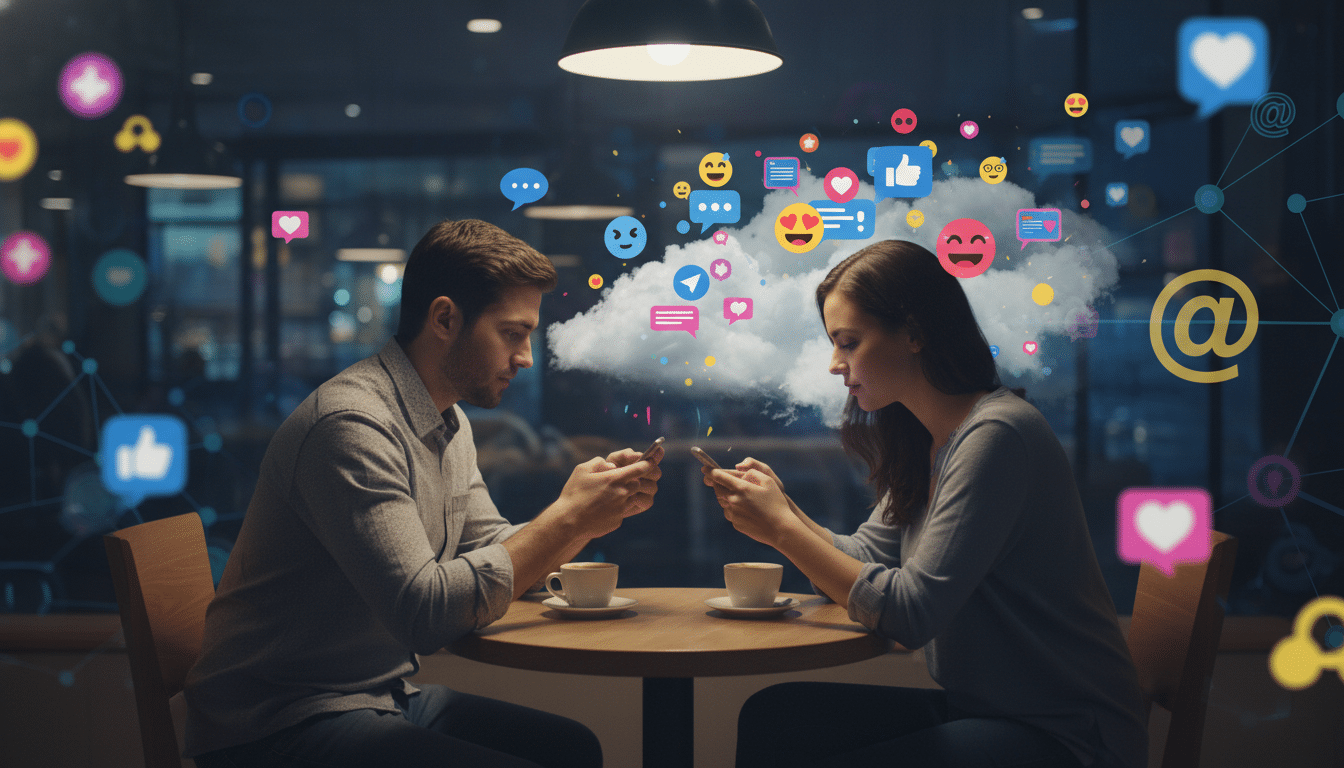
Between 2023 and 2025, fatigue with dating apps became a notable phenomenon. The market for these apps surpassed $6 billion in 2024. It is expected to reach $8,9 billion in 2030. Even so, many users feel tired and frustrated. This shows that making a lot of money doesn't mean having happy users.
Apps like tinder, Bumble, Badoo, Hinge e BLK They made it easier to meet new people. However, they ended up encouraging practices that leave users exhausted. The swipe mechanics, payment barriers, and repetition in the algorithms make the experience superficial.
Advertisements
However, a significant shift is happening. People are seeking more genuine connections and real encounters. The movement Slow Dating And non-dating spaces are becoming popular. This movement may signify the end of swipe as we know it in the world of online dating.
Soon, we will explore the technical and social causes behind this trend. This includes gender inequality, the ghosting frequent and paid filters in BumbleWe will also discuss the consequences for users and platforms. The story is based on data from 2023 to 2025 and observations by researchers.
Dating App Fatigue: Why Users Are Abandoning “Swipe”
People's relationship with dating apps, such as tinder e BumbleThings have changed a lot. What was once new has now become tiresome for many. This fatigue from the constant use of these apps is known as "Dating App Fatigue." It's when you feel exhausted, disinterested, and as if you're doing a second job online.
Definition and signs of the phenomenon
This weariness manifests as emotional exhaustion. People get tired of opening the apps. They feel bad about relationships that seem superficial and fear meaningless interactions.
Studies indicate that a large portion of Generation Z and Millennials feel this exhaustion. Many talk about feeling emotionally drained frequently. And most have experienced "ghosting," which is when someone disappears without explanation.
Common behaviors include deleting apps multiple times. People also try to limit their usage time. Some use options like Bumble's pause function to take a break from them.
Technical and design causes behind burnout.
The gamification of using these apps, with the "swipe" feature, makes choosing almost like a game. Sounds and notifications attempt to keep users engaged, but focus more on the quantity than the quality of connections.
Viewing the same profiles multiple times can lead to boredom. This happens a lot in... HingeFor example. This diminishes people's interest.
Paid features in apps like tinder Bumble and other platforms frustrate those who don't want to spend money. Having to pay for more visibility or special filters separates users into groups.
Having to choose between several apps, such as Tinder, Bumble and HingeThis makes everything more tiring. It causes a loss of efficiency and increases the strain when making decisions.
Consequences for users and platforms
This fatigue leads to fewer real-life encounters. On Hinge, for example, only 14% of matches actually meet in person. This shows the difficulty of taking the relationship beyond the virtual world.
Dating apps, like Match groupThey feel the impact in their pockets. They experienced little growth in 2024. And they are increasingly dependent on money coming from paid services. This shows a risk for the market.
Many people are looking for alternatives, such as niche apps and real-life dating. BadooFor example, most singles are tired of these boring apps. Many say that the hassle of choosing is the main problem.
Psychology and sociology of fatigue: burnout, "decision fatigue," and erosion of confidence.
Apps like Tinder, Bumble and Badoo They change our lives beyond just online time. Those who use these apps often feel aversion when they open the screen. This is called Dating app burnoutIt's similar to burnout at work. There's a feeling of obligation, anxiety before use, and sadness afterward.
Burnout and its emotional effects.
Studies show that dating apps affect emotions. Around 80% of users experience emotional exhaustion. Women worry more about fake profiles and feel anxiety.
People are developing strategies to cope with this. They limit active conversations and take breaks from apps. Bumble suggests focusing on up to three pairs at a time.
Ghosting, loss of social decorum, and impact on expectations.
O ghosting It's common, affecting most people. This act damages trust and changes the way we relate to each other.
Online conversation is often superficial. Short profiles and men initiating conversations create imbalances. This can increase fatigue.
Women face safety challenges on dating apps. There are many cases of harassment, which negatively impact the experience.
Recession in the novel industry and economic factors.
The economy influences relationships. Young people prioritize financial stability and cut corners on dates. This reduces their interest in going out.
Competition in the dating app world leads men to use premium services more. This, along with indiscriminate swiping, affects the quality of matches.
This scenario, along with app burnout, decision-making fatigue, and the practice of... ghosting It changes the perspective on dating. This affects how communities interact.
The attraction economy, market strategies, and the rise of niche platforms.
A The economy of attraction The way we view dating apps today has changed. Large platforms always need to adapt quickly. By 2024, global revenue exceeded $6 billion. They expect to reach $8,9 billion by 2030. This expansion shows that premium subscriptions and microtransactions are important, but it also points to limitations in the current system.
Tinder saw clear advantages with the premium model. Services like Tinder Gold They greatly improved revenue per user. Still, monetization depends on paid upgrades and sales of exclusive benefits. In 2024, the Match group It grew by only 3,3%, showing that the current model is saturated.
In terms of payment for features, there are notable differences. In the US, men are 41% more likely to pay than women. This creates differences in user experience. Companies are under pressure to find new revenue streams without losing user trust.
-
Market dynamics: overall growth versus regional maturity.
-
Product strategies: subscription, virtual goods, and paid offline experiences.
-
App monetizationA balance between profit and quality of experience.
Platforms focused on niches are engaging users more. From 2022 to 2024, they saw a 35% increase in engagement. Furthermore, they are 42% more likely to create meaningful connections than general apps.
See BLK, which has become a socialization platform, with over 30% of users seeking to make friends. Hinge is another example. It focuses on quality relationships, not quantity.
-
Niche indicators: up to 30% higher daily active usage and retention driven by relevance.
-
Community trust: moderation and purpose increase retention.
Apps are changing their design to facilitate social discovery and events. Now, they combine virtual speed-dating, interest-based groups, and meetings with activities. This helps to better filter users and increases the quality of connections.
Moderation and verification are becoming increasingly important. Investing in trust includes rigorous verification, AI-powered moderation, and co-creation for safety. Platforms like Badoo are improving their processes to protect users and prevent bad behavior.
Hybrid models are creating a new dynamic between socialization and dating. Integrating social features with dating makes connections more natural. Therefore, traditional apps need to think about new ways to add value, without simply charging for everything.
-
Strategic impact: niches show that focus, community, and purpose lead to sustainable growth.
-
Challenge for leaders: Match group And competitors need to innovate without losing revenue.
Alternatives to Swipe: Slow Dating movement, non-dating spaces and new languages of dating.
O end of swipe It highlights practices that value time and place. Movements such as Slow Dating They encourage well-thought-out encounters. Meanwhile, online communities create pathways to discovery beyond the algorithms of apps like Tinder, Badoo, or Bumble.
Slow Dating and Intentional Practices
O Slow Dating It encompasses intentional dating techniques. This includes conscious choices, as well as checking compatibility via video before making plans. People seek ways to fit dates into their routines, preferring memorable activities to simply having coffee.
Movements like boy sober and nanoships suggest pauses and brief, yet intense, relationships. The practice called Sit at the Bar September encourages physical presence and live conversations.
Some platforms advise limiting active connections. Bumble itself suggests prioritizing quality over quantity. Choose dates that are unique experiences, an approach that reduces frustration and improves genuine compatibility.
Non-dating spaces and discovery through interests
Os non-dating spaces They change how we meet: platforms like Reddit, Discord, Instagram e TikTok They have become places for spontaneous encounters. Letterboxd Gaming forums foster a sense of community based on shared interests.
These platforms provide a sense of belonging and a way to get to know someone through their actions, not just their profile. By sharing hobbies in spaces like... RedditPeople can show what they like without the pressure of dating apps.
Everyday examples prove that friendships can arise from shared interests. Specialized tools and local groups create more genuine bonds than a simple swipe.
New terms and experiences of co-creation
Concepts like collaborating, Freak Matching, and Hobby Homies highlight co-creation. Working on projects or content together serves to see if there is alignment.
Themed events, speed dating based on shared interests, and collaborative challenges help signal clearer intentions. Such practices reduce the confusion common in dating apps and increase the chance of a meaningful connection.
Helpful tip: mix non-dating spaces In addition to in-person meetings, test the chemistry via video and focus on activities that demonstrate compatibility. This combination expands the options beyond Tinder, Badoo, and Bumble.
Conclusion
Fatigue on dating apps like Tinder and Bumble stems from several factors. Game-like design, the need to pay for features, differences between men and women, ignored messages, and distrust are some of them. These platforms are losing users. This happens because they prioritize quick interactions that increase the quantity, but not the quality, of connections. This way of operating ends up causing emotional exhaustion and frustration.
To improve online dating, some things need to change. Investing in trust is crucial. This includes verifying profiles, improving moderation, and focusing on quality connections. It's also important to offer worthwhile live events and subscriptions. This way, brands can improve their image and retain users.
The future may bring more variety, with spaces that aren't just for dating and methods like slow and intentional dating. People could try new things, such as limiting conversations to a few at a time. Or using videos to get a feel for the other person before meeting. App creators should focus on making people truly connect, not just increasing statistics.
The end of "swiping" isn't the end of online dating. It's a chance to change and make these connections more human and community-oriented. This is a chance for everyone to think differently about love in the 21st century and to make digital dating sustainable and enjoyable again.
Content created with Artificial Intelligence Assistance