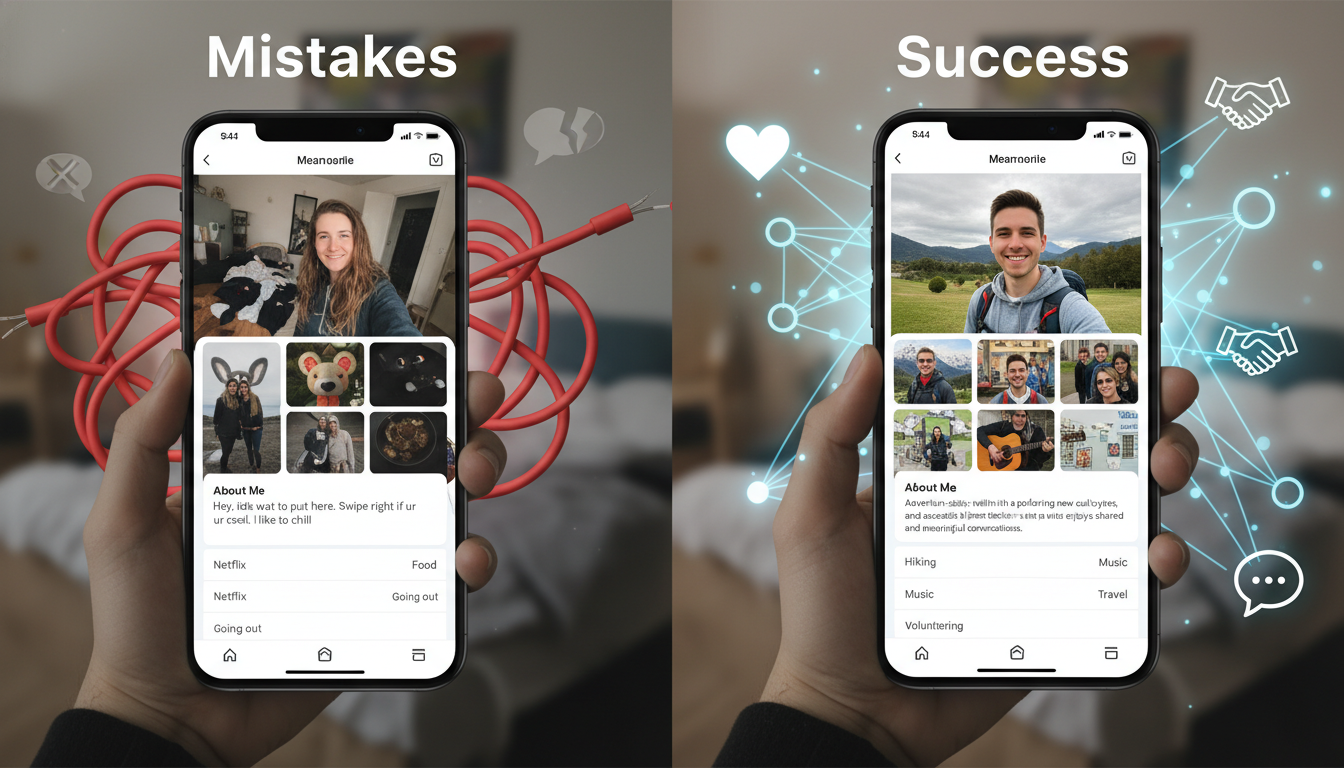
Digital security in apps like Tinder, Instagram, or WhatsApp is crucial in Brazil. Scams often involve deepfakes and voice cloning. Nowadays, it is more complicated to distinguish between real and fake profiles.
Reports such as those by Rick Songl in Fast Company warn about criminals. They combine public data with automation to create convincing fake profiles. This increases the risk of personal data exposure and financial losses.
Ads
Even those who are careful online may leave clues that feed databases. This text offers practical tips for recognizing and avoiding fake profiles. We will discuss how to verify information and stay safe on Tinder and other networks.
We want to assist those who use dating apps in Brazil. This includes professionals attentive to digital security and family members. We will show how to identify fraud, prevent fake profiles, and what to do if you become a victim of a scam.
Understanding the problem of fake profiles and AIs in apps
Dating apps and social networks are full of fake profiles. This reduces people’s trust in apps and creates more online dangers. To avoid these issues, we need to remain vigilant and use various forms of verification.
What are fake profiles and synthetic identity
Fake profiles are accounts created with information or photos of another person. Synthetic identity uses invented photos, data, and behaviors to appear real. This creates personalities that deceive us into thinking they are genuine.
Tech giants like Meta and Tinder see more suspicious accounts emerging. Using synthetic identity makes it easier to carry out scams, even with online security systems.
How AI (deepfakes, voice cloning, and generated images) enhances scams
With advanced technology, creating image and audio forgeries is easy. This, combined with psychology and deception strategies, creates messages that make us believe in lies.
The voice cloning technique has already been used to deceive people in money transfers. Deepfakes can perfectly imitate facial expressions and voice tones, making scams seem real.
Real examples and recent trends (fraud, deepfakes, and use by criminal groups)
In 2022, the FBI reported that criminals used deepfakes to obtain undue advantages. With truly convincing voices, they managed to close contracts and cause massive financial losses.
Criminals are using fake profiles to conduct fraudulent interviews and deceive verification systems. The tools to create these profiles have become cheaper, increasing the number of scams.
- Proliferation of artificial profiles in apps and networks.
- Increase in fake news distributed by automated accounts.
- Coordinated use by groups that exploit gaps in digital security.
How AI fraud works in dating apps
Dating app scams use artificial intelligence to appear real. With this technology, criminals create conversations that mimic humans. This makes apps like Tinder more dangerous.
The collection of public information is the beginning. They use profiles and comments on the internet. This creates messages that seem to come from a friend.
Personalized messages
- AI examines victim details to write unique texts. This increases trust quickly.
- Messages make you feel close to the sender. Thus, people are more likely to respond.
Improved social engineering
- Fake conversations remain realistic and respond intelligently. This keeps the victim engaged for longer.
- Emotional triggers like empathy and love are exploited. This manipulates the person’s emotions.
- Because they are automated, these techniques reach many people at once.
Fake audio and videos that simulate known people
- Voices are cloned to sound like someone known. This is used in fake audio.
- Deepfakes create convincing videos. They can appear very real.
- Such methods are used in scams to request money or information.
Creating plausible stories to gain trust
- Scammers invent stories, such as jobs abroad or personal crises. They use fake images and documents.
- Even celebrities and phishing sites are imitated. This makes the lie seem true.
Understanding how these scams work can protect you. On Tinder and other apps, be wary of strange requests and overly fluid conversations.
How to identify signs of fake profiles and suspicious behavior
To stay safe while using apps, it is important to know how to recognize fake profiles early on. Look for simple patterns. Maintain healthy skepticism before sharing personal information or accepting invitations to chat elsewhere.
Visual signs in photos and profile inconsistencies
Photos that are too perfect or strange may be AI creations. Check if the eyes are different or if the hands look wrong. Lighting can also give you clues.
If you see the same image in multiple places on the internet, be suspicious. Profiles without much information, few photos, or very vague biographies require more attention.
Red flags in conversations: urgency, money requests, and sensitive information
If someone pressures you to decide quickly, it might be a fake profile. Ignoring requests for money, IDs, passwords, or codes is the safest route. Reporting is also important.
If someone always makes excuses not to meet or have video calls, be careful. Sudden changes in the way of talking are also a warning sign.
How to use cross-verification (reverse image search, social media checks)
Use Google Images or TinEye for a reverse search of photos. This shows if the photo was used elsewhere. It is a way to catch those who use others’ photos.
Verifying the person on Facebook, Instagram, and LinkedIn helps. Real profiles interact with others, have photos from different occasions, and consistent friends.
If possible, look at photo metadata and confirm the identity with a call or video chat. This minimizes the risk of falling for complex fraud.
- Check for inconsistencies in language and claims regarding profession or location.
- Be wary of perfection: signs of fakes appear in small details.
- Prioritize your security by asking for simple confirmations before proceeding.
Security
Keeping your online life secure is simple. Start by adjusting privacy and limiting access to your information. This will protect you against many digital scams.
Privacy settings and limiting personal data exposure
It is good to periodically review privacy settings. Keep profiles and albums visible only to friends, and be careful with what you post. Do not share sensitive data, such as ID numbers or addresses.
On Facebook, use lists to control who sees your posts. On Instagram, adjust the privacy of your stories. And on LinkedIn, be discreet about your routine.
Enable two-factor authentication and protect accounts with strong passwords
For greater security, enable two-factor verification on your accounts. Prefer authenticator apps over SMS. They are more secure.
Create strong and unique passwords for each account. A password manager can help manage these complex passwords. This makes life much harder for hackers.
How to reduce public material that facilitates voice and image cloning
Be cautious about what you publish in video or audio. Avoid sharing phrases or moments that could be copied by third parties.
Control app access to your microphone and camera. Clean up applications you do not use. This decreases the risk of digital attacks.
- Perform periodic privacy audits to keep digital security updated.
- Use two-factor authentication whenever possible to protect accounts.
- Minimize public content that facilitates voice or image cloning.
Best practices for interacting in apps (Secure Tinder and other platforms)
Before scheduling a meeting, it is good to take precautions for your safety. Choose public places and tell someone you trust about your plans. Do not give your address before trusting the person.
A quick video call can confirm if the person is real. Fake profiles usually avoid live videos. Asking to perform a gesture or say something specific helps identify automated responses.
Verifying the person’s social media can clarify doubts. Old and active accounts indicate a lower chance of being a fake profile. If someone avoids appearing on video, it is better to be suspicious and perhaps block them.
When asking for extra information, request only what is truly necessary. Use secure means for this. Important documents should only be shared in legitimate cases. Never send personal documents via insecure messages.
- Ask for a photo or video now to see if the person does what you ask.
- Look at profiles on Instagram or LinkedIn to check the information.
- Do not share your personal data before fully trusting the person.
Faced with strange attitudes, do not hesitate to use the app’s functions to report and block. Apps like Tinder, Bumble, and Happn allow you to report suspicious profiles. Before blocking, save screenshots and links for possible reports.
- If you notice something wrong, block and report it immediately.
- Keep evidence: conversations, photos, and profile details.
- In case of a crime, go to the police station with the evidence.
Keep your experience on Tinder safe by avoiding dubious profiles. Be careful with those who ask for secrecy or money. By following these tips, you stay safer on your dates.
Technical tools and methods for checking and protection
To have more security on the internet, mix automated tools with checks made by you. Here are some easy tips that help identify fakes and reduce risks on dating apps and social networks.
Reverse image search
- Use Google Images, TinEye, and Yandex to compare photos. Thus, you can find the origin of images that appear on different profiles or websites.
- Search for identical images and their variations. Cropped or modified photos may show if they were reused.
- If you find nothing, it does not mean it is true. View reverse search as only one part of the solution.
Metadata verification
- Look at EXIF data, when possible, to verify the date, camera model, and GPS coordinates of original photos.
- Remember: many applications strip this data when sending photos. The lack of metadata does not confirm that the profile is real.
- Use metadata verification along with other information. For example, presence on social networks and the consistency of the story told.
Deepfake detector and audio analysis
- Access specialized tools to discover manipulations in videos and audio.
- Observe if there are strange things in facial movements and light. Pauses and unusual sounds can show voice cloning.
- There are solutions from companies and research labs that can help the average user.
Reliable apps and services
- Choose services with a good reputation, such as those from big names in digital security and academic projects.
- For example, financial institutions provide tips on how to protect yourself online.
- Try these services with non-sensitive information before using them in dubious situations.
Behavioral protocols and automated signals
- Platforms may have systems that detect strange behaviors. This includes unusual messages, times, and locations.
- Suspicious profiles may need to undergo extra verification, such as a current photo or voice confirmation.
- People can also create their own security routine. For example, asking for a quick video, verifying social media, and using reverse image search.
Limitations and best practice
- No tool is perfect. Combinations of automated methods and manual checks improve results.
- Save evidence such as screenshots and original files before blocking or reporting someone. This can help later.
- Maintaining good internet security habits reduces risks. Thus, it becomes harder for someone to clone your voice or image.
How to act if you are the target of a scam or identify fraud
If you discover a fake profile or a scam, it is important to act fast. This helps to reduce losses. You must protect your accounts, collect evidence, and notify both the platforms and authorities.
Here are some simple guidelines for dealing with a scam. They also serve to maintain your security on the internet.
Immediate steps
- Block the suspicious profile and other accounts linked to it on social media.
- Save evidence such as screenshots, links, audio, and videos before deleting the contact.
- Change your email, social media, and bank account passwords. Do not forget to enable two-factor verification.
- Disconnect from sessions open on other devices and check apps that access your accounts.
How to formalize a complaint on platforms
- Use the app’s reporting forms (such as Tinder, Instagram, WhatsApp) and attach the evidence you collected.
- Clearly state what happened, including dates and times of the conversations.
- Request that they remove the offensive content and block the fake profile.
Reporting to authorities
- File a police report at your local station or one specialized in cybercrimes.
- If you have had financial losses, talk to consumer protection agencies.
- Show all the evidence you gathered to the authorities. This helps in the investigation and can punish those responsible.
Informing financial institutions
- If you made any transfer, notify your bank immediately. This may help to recover the money and block accounts.
- Ask about how to block suspicious movements and how to proceed with disputes.
Recovery and prevention of new attacks
- Consider using a service that monitors your identity to avoid problems in the future.
- Update your personal information that was exposed and warn your friends and family about the risk of misuse of your data.
- Look for educational materials offered by banks and institutions. They often have great tips on how to avoid scams and improve your online security.
Reporting fraud and taking constant care increase your chances of protecting yourself. Being organized and noting everything helps in investigations. It also helps protect other people from similar fraud.
Conclusion
Scams use fake profiles and AI, mixing social engineering, deepfakes, and synthetic identities. This makes digital security very important. It is crucial for those who use Tinder or other dating sites. Knowing these risks helps to spot forgeries and avoid scams.
To protect yourself, you need to be always alert and adopt basic measures. This includes limiting the exposure of your data, using two-factor authentication, and strong passwords. Tools like reverse image search and deepfake detectors reinforce security along with manual checks.
When suspecting a profile, confirm the identity through other means. Be aware of requests for money or pressure. Document any suspicious behavior before blocking and reporting. Report to dating services and, if necessary, to the police. Guidelines from the FBI and banks also help.
It is important to share information with friends and relatives to reduce fraud. Staying updated on news in digital security is essential. All of us can contribute to making dating apps safer.
Content created with the help of Artificial Intelligence.